
The best supplements for skin care
Although we may not perceive it, the skin is the largest organ in our body and accounts for 10 to 15% of body weight. It forms a system that includes hair, nails, as well as sebaceous and sweat glands. Among its main functions is protecting the body from external factors such as bacteria, chemicals, and temperature. It also carries out the excretion and absorption of substances and the synthesis of vitamin D.
Therefore, this important organ requires care, and we must bear in mind some dangers that can affect it, especially when we are more exposed to the sun in summer. Among the risks our skin may face if we do not tend to it properly are photoageing, poor hydration, itching, redness, and irritation. Furthermore, on the other hand, the skin can suffer from diseases such as psoriasis, acne, atopic dermatitis, hives, or even skin cancer.
Photoageing, causes and possible solutions
Photoageing is the premature ageing of the skin due to chronic exposure to ultraviolet rays, or UV.
When do we know our skin is affected by photoageing?
Signs may include wrinkles, mottled hyperpigmentation, loss of translucency, and decreased elasticity. Ultraviolet rays are invisible, but it is well known that they come from the sun, as well as from sunlamps and tanning beds.
Fortunately, their effects can be prevented by using good sun protection, especially during the months of highest solar radiation. Their damaging effects on the skin can also be treated with a variety of modalities including topical retinoids, cosmetics, chemical peels, injectable neuromodulators, or soft tissue fillers1.
And we can rely on the help of food supplements, vitamin complexes, and vegetable oils for the normal maintenance of our skin. For this, it will be necessary for these supplements and oils to include certain components.
Essential vitamins to maintain normal skin care
One of the pillars for maintaining skin health and avoiding these risks is a good diet, but which vitamins and nutrients are necessary? It must be borne in mind that the skin is constantly renewing itself: the epidermis is remade every month. Therefore, it needs to be nourished from within with nutrients, essential compounds such as vitamins C and B, peptides, and minerals2. The general guidelines of a good diet will always be useful to us: fruit, vegetables, and unprocessed foods, in which we can find some key elements:
Vitamin C
Vitamin C contributes to the protection of cells from oxidative stress3, which in this case would be caused by the sun's rays in the epidermis, where it absorbs the free radicals produced by UV rays. In the thick inner dermis, vitamin C is needed as it contributes to normal collagen formation for the normal function of the skin3, the protein that gives the skin its structure and plump appearance.
People with diets low in vitamin C may be at risk of extremely dry and brownish skin, excessive bruising, and slow-healing wounds. However, recent studies show the link between vitamin C in the diet and the skin in healthy individuals2, as well as vitamins D and E, carotene, and plant-based products, such as certain acids and oils, as we shall see later.
B group vitamins
B vitamins are necessary for the proper functioning of the body, and among them is biotin, which contributes to the maintenance of normal hair and skin3.
Specifically, vitamin B12, also known as cobalamin, has a complex relationship with the skin. Altered cobalamin levels can lead to dermatological manifestations that may indicate a deficiency or excess of this vitamin. Cutaneous manifestations of cobalamin deficiency include hyperpigmentation and changes in hair and nails. In addition, several dermatological conditions are linked to cobalamin excess or deficiency4.
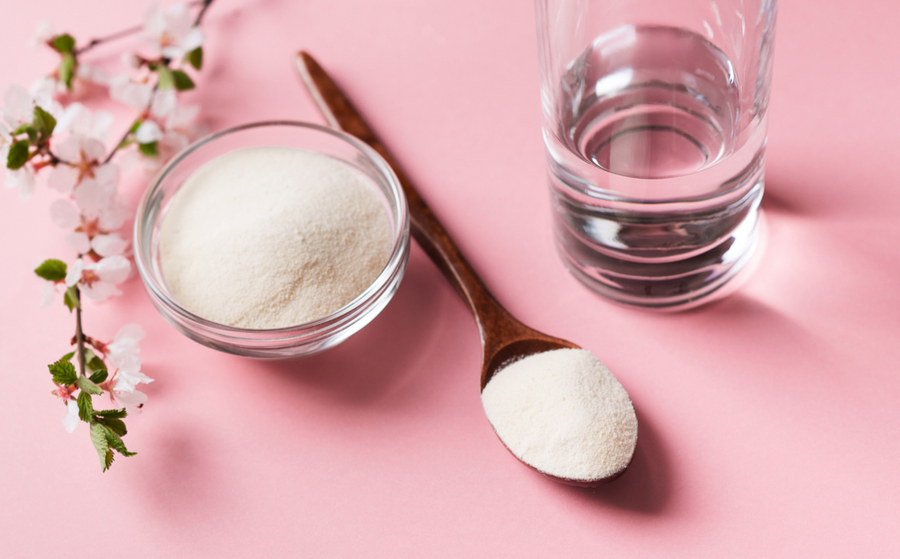
For its part, vitamin B2, or riboflavin, also plays its role in maintaining skin health: it acts as an antioxidant, as it contributes to the protection of cells from oxidative stress3, contributes to the maintenance of normal mucous membranes3, and helps maintain normal skin5.
Vitamin A
Multiple studies point to vitamin A as a potential defence against possible skin problems that can result from excessive exposure to ultraviolet light.
It should be highlighted that vitamin A is essential for the maintenance of normal skin3.
Hyaluronic acid, responsible for maintaining skin hydration
One of the effects of a lack of proper hydration is that the skin loses its natural moisture, and this absence can trigger ageing, since one of the components of young, healthy skin is water. To combat this progressive decline due to age and other external agents, the skin relies on hyaluronic acid, which retains water molecules and therefore plays an important role in the hydration and metabolism of the dermis. An adequate amount of this molecule is key in wound healing and tissue repair processes6.
Due to its remarkable potency, hyaluronic acid is used in cosmetic and nutricosmetic products. In particular, cosmetics are well-known products precisely for exhibiting notable anti-wrinkle capacity, anti-nasolabial fold properties, anti-ageing effects, space-filling, and facial rejuvenating properties. This has been achieved through soft tissue augmentation, improved skin hydration, collagen and elastin stimulation, and facial volume restoration7.
Wrinkles and collagen
Collagen is an essential protein in the human body and forms part of different tissues, including the epidermis. It provides flexibility, hydration, elasticity, and strength. In addition, it is found in bones and joints. As we age, we produce less collagen, leading to the formation of wrinkles on the skin.
Its study in relation to skin care has been increasing, and research into the possibilities of collagen-based food supplements currently continues, yielding promising results. Furthermore, studies conclude that products including this component are generally safe and no adverse events have been reported8.
The consumption of food supplements can contribute to modulating skin functions and, therefore, could be useful against skin ageing.

Studies have been conducted on the specific bioactive collagen molecule investigating the formation of eye wrinkles. This molecule, which is found in the skin and can be taken as a food supplement, participates at a metabolic level in the formation of procollagen II, elastin, and fibrin. These are compounds that form part of the skin's structure and prevent the formation of wrinkles9.
Anastore offers ANASKIN, a supplement containing vitamin C, which contributes to normal collagen formation for the normal function of the skin3. It also contains hyaluronic acid, collagen, coenzyme Q10, and bilberry. And the Vitamin B Complex, extracted from brewer's yeast, a natural source, contains Vitamins B1, B2, B3, B5, B6, B8, B9, and B12.
Vegetable oils: nourishing the skin
Vegetable oils are concentrates that are extracted directly from trees and plants and can be used as ingredients in cosmetic products as they have interesting nourishing and hydrating properties for the cutaneous system.
Rosehip oil
The Rosa rubiginosa, from whose seeds rosehip oil is obtained, is used in dermocosmetics thanks to its properties as an effective skin regenerator: it has beneficial effects on photoaged skin, promotes epithelialisation or tissue regeneration during healing, and hydrates and firms the skin10.
One of the most outstanding characteristics regarding its chemical composition is its contribution of polyunsaturated fatty acids, one of the applications of which is slowing down the effects of age on the skin, as well as protecting against UV rays11.
Borage seed oil
The oil from these seeds provides beneficial fatty acids for good skin health, including gamma-linolenic acid, one of the well-known omega-6s.
The use of omega-6 essential fatty acids is of potential interest for use in cases of atopic dermatitis and, in general, they play a vital role in the structure and physiology of the skin. Specifically, borage oil is of interest because it contains two to three times more gamma-linolenic acid than other oils and may be useful in patients with less severe atopic dermatitis seeking an alternative treatment12.
Organic Borage Oil and Organic Rosehip Vegetable Oil, indicated for skin balance and youthfulness, and which nourishes and delays skin ageing, respectively, are available on the Anastore website.
In addition to this information, it is worth remembering that prolonged and unprotected exposure to the sun is harmful to our skin. Protecting ourselves is our responsibility and we cannot ignore either the use of sun creams or other simple remedies: avoiding exposure during the central hours of the day and protecting ourselves with caps, hats, or parasols, in addition to abundant hydration.
Bibliography
- Han A, Chien AL, Kang S. Photoaging. Dermatol Clin. 2014 Jul;32(3):291-9, vii. doi: 10.1016/j.det.2014.03.015. PMID: 24891052.
- The edible skincare diet
- COMMISSION REGULATION (EU) No 432/2012 of 16 May 2012 establishing a list of permitted health claims made on foods, other than those referring to the reduction of disease risk and to children’s development and health.
- Brescoll J, Daveluy S. A review of vitamin B12 in dermatology. Am J Clin Dermatol. 2015 Feb;16(1):27-33. doi: 10.1007/s40257-014-0107-3. PMID: 25559140.
- Mahabadi N, Bhusal A, Banks SW. Riboflavin Deficiency. 2020 Jul 21. In: StatPearls [Internet]. Treasure Island (FL): StatPearls Publishing; 2021 Jan–. PMID: 29262062.
- Keen MA. Hyaluronic Acid in Dermatology. Skinmed. 2017 Dec 1;15 (6):441-448. PMID: 29282181.
- Bukhari SNA, Roswandi NL, Waqas M, Habib H, Hussain F, Khan S, Sohail M, Ramli NA, Thu HE, Hussain Z. Hyaluronic acid, a promising skin rejuvenating biomedicine: A review of recent updates and pre-clinical and clinical investigations on cosmetic and nutricosmetic effects. Int J Biol Macromol. 2018 Dec;120(Pt B):1682-1695. doi: 10.1016/j.ijbiomac.2018.09.188. Epub 2018 Oct 1. PMID: 30287361.
- Choi FD, Sung CT, Juhasz ML, Mesinkovsk NA. Oral Collagen Supplementation: A Systematic Review of Dermatological Applications. J Drugs Dermatol. 2019 Jan 1;18(1):9-16. PMID: 30681787.Oral intake of specific bioactive collagen peptides reduces skin wrinkles and increases dermal matrix synthesis.
- Proksch E, Schunck M, Zague V, Segger D, Degwert J, Oesser S. Oral intake of specific bioactive collagen peptides reduces skin wrinkles and increases dermal matrix synthesis. Skin Pharmacol Physiol. 2014;27(3):113-9. doi: 10.1159/000355523. Epub 2013 Dec 24. PMID: 24401291.
- Elsevier. Vol. 27. Nume. 6. Rosehip oil. Composition and dermocosmetic applications.
- Contri RV, Kulkamp-Guerreiro IC, da Silva SJ, Frank LA, Pohlmann AR, Guterres SS. Nanoencapsulation of Rose-Hip Oil Prevents Oil Oxidation and Allows Obtainment of Gel and Film Topical Formulations. AAPS PharmSciTech. 2016 Aug;17(4):863-71. doi: 10.1208/s12249-015-0379-9. Epub 2015 Sep 17. PMID: 26381915.
- Foster RH, Hardy G, Alany RG. Borage oil in the treatment of atopic dermatitis. Nutrition. 2010 Jul-Aug;26(7-8):708-18. doi: 10.1016/j.nut.2009.10.014. PMID: 20579590.
About the author
Content researched and written by the Anastore editorial team.
Reviewed and verified against scientific literature by our Nutrition and Research Department.
Find out more about our editorial policy and scientific rigour.

This article is strictly for informational purposes and does not replace the advice of a healthcare professional.