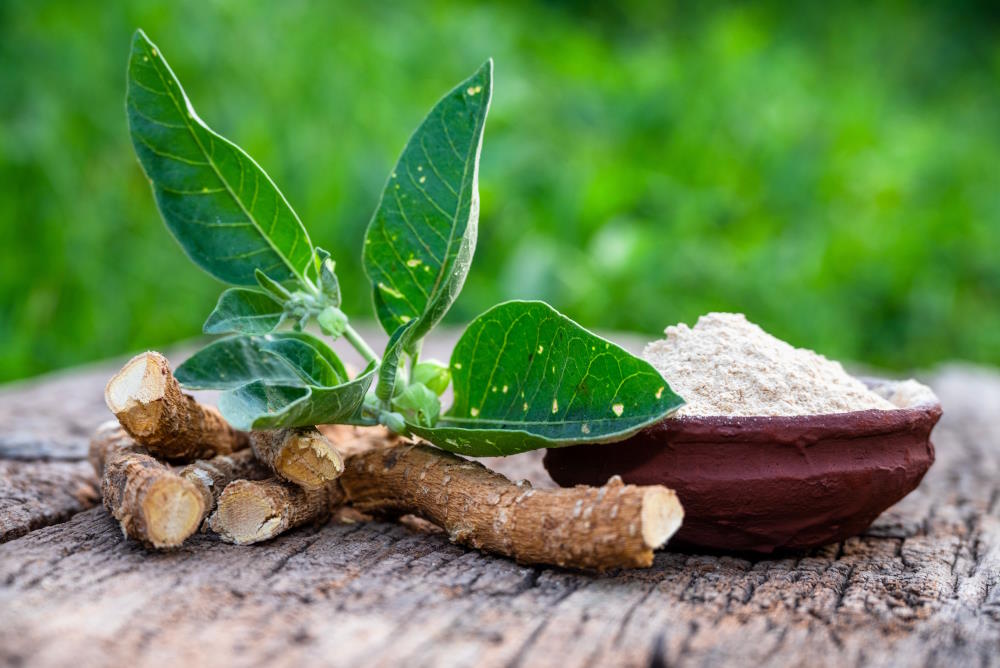
Did you know that Ashwagandha could be beneficial for your skin health?
If I ask you which plant comes to mind to combat the frantic pace of everyday life, it is highly likely that you will think of ashwagandha. In recent years, this botanical extract has made headlines for its ability to help us cope with modern stress. However, there is currently strong research into the possibility that ashwagandha helps maintain skin health1.
Before looking at what the mechanism might be by which ashwagandha could have this property, let us see what happens to our skin and what causes it to deteriorate.
How chronic stress impacts our skin
The skin is the largest organ in our body and acts as a flawless mirror of our internal health. When we experience continuous physical or mental tension, our adrenal glands release massive amounts of cortisol, the stress hormone.
Excess cortisol is highly destructive to the dermal matrix for several reasons:
- Degradation of collagen and elastin: Cortisol promotes processes that degrade collagen and elastin and can accelerate skin ageing, causing sagging and the premature appearance of fine lines2.
- Alteration of the skin barrier: A high level of stress decreases the production of the skin's natural lipids. This translates into transepidermal water loss, leaving the skin dehydrated, dull, and more reactive to external factors3.
- Increased inflammation: Sustained stress generates pro-inflammatory molecules and free radicals. This oxidative stress damages skin cells, slows down their regeneration, and can exacerbate conditions such as redness or sensitivity4.
This is exactly where the bioactive compounds of certain plants could come into play.
What exactly is Withania somnifera?
Withania somnifera, popularly known as ashwagandha, is an evergreen shrub belonging to the nightshade family. From the perspective of food technology and phytochemistry, the properties of this plant reside in its root.
Ashwagandha roots are rich in a group of biologically active compounds called withanolides (steroidal lactones), in addition to containing alkaloids, saponins, and iron. The concentration and quality of these withanolides are what determine the efficacy of the extract.
This plant is classified within the group of "adaptogens". In physiological terms, an adaptogen is a natural substance that increases the organism's resistance to a wide range of adverse stimuli (physical, chemical, or biological), promoting homeostasis or internal balance. By regulating our body's response to external aggressions, adaptogens have a cascading effect that benefits multiple systems, including skin tissue.
How ashwagandha could help maintain skin health
Modern nutrition has coined the term Beauty from Within. It is no longer enough to apply topical creams if we do not provide our cells with the necessary nutrients and bioactive compounds to defend and regenerate themselves via the bloodstream.
There is a health claim pending validation by the EFSA stating that ashwagandha "helps maintain skin health"1. This possibility is currently being investigated, and studies are already underway. This is supported by the synergistic action of its components. At a cellular and systemic level, ashwagandha could provide the following benefits:
- Antioxidant effect: The withanolides in the root stimulate the human body's natural antioxidant enzymes, such as superoxide dismutase and glutathione peroxidase. These enzymes neutralise the free radicals generated by pollution, UV radiation, and a poor diet before they can damage skin cell membranes5.
- Regulation of the dermal ecosystem: By helping the organism modulate cortisol release, ashwagandha could indirectly contribute to keeping the collagen and elastin network intact. A lower presence of cortisol means less structural degradation of the dermis6.
- Support for cellular vitality and renewal: For the skin to look radiant and healthy, it requires efficient cellular turnover. The phytochemicals in Withania somnifera could support the energy metabolism of the cells, helping the skin to remain oxygenated, nourished, and capable of self-repair during the nocturnal rest cycle7.
How to integrate Ashwagandha into your daily life? Choose your ideal format
The food supplement market has evolved enormously. We know that there is no universal "perfect" format, but rather the right format for each person's lifestyle. Bioavailability and consistency are key to observing results in the skin.
At Anastore, product formulation prioritises raw materials of organic origin, guaranteeing the absence of pesticides and heavy metals, which is essential when it comes to taking care of our health and our skin. Here we explain how to choose the format that best suits you:
1. Organic ashwagandha capsules (Dry root extract)
The capsule format is the king of convenience and precision. It is designed for people with busy schedules who need an exact, standardised dose without complications.
- Why choose it: It contains a highly concentrated dry extract. Being encapsulated, the dose of withanolides is millimetrically controlled. It is perfect for carrying in your handbag, to the office, or when travelling.
- How to take it: Ideally with a glass of water during meals, following the labelling instructions.
- Discover it here: Organic ashwagandha capsules
2. Organic ashwagandha powder
For lovers of integrative nutrition and functional cooking, powder is the most versatile format. It allows you to play with the doses and create nutritional synergies with other foods.
- Why choose it: It maintains the complete matrix of the dried and milled root. By taking it in powder form, you can easily incorporate it into smoothies rich in vitamin C (which also supports collagen formation), yoghurts, or prepare the famous Moon Milk (warm milk with ashwagandha and spices before bed).
- How to take it: Its earthy flavour combines very well with pure cocoa, cinnamon, and plant-based drinks. A small daily teaspoon is enough to enrich your diet.
- Discover it here: Organic ashwagandha powder
3. Organic Ashwagandha Oral Solution (Liquid)
Innovation in supplementation brings us oral solutions, an excellent option for those who have difficulty swallowing capsules or are looking for a different digestive absorption.
- Why choose it: Oral solutions tend to have a very gentle assimilation in the digestive tract. Furthermore, Anastore's ashwagandha oral solution contains organic forest honey among its ingredients, providing a pleasant flavour.
- How to take it: Simply take 1 dose a day using the measuring spoon provided.
- Discover it here: Organic Ashwagandha Liquid Oral Solution
Frequently asked questions about ashwagandha and the skin
How long does it take to notice the effect of ashwagandha on the skin?
Skin cell regeneration takes approximately 28 to 30 days in an average adult. Botanical supplements do not have an immediate cosmetic effect like a highlighter; rather, they work from the foundation. Continuous use of at least 4 to 8 weeks is recommended to start noticing more rested skin, with better tone and greater resilience against environmental factors.
Can I take ashwagandha if I already use antioxidant creams?
Yes. Your topical cosmetics will protect the outermost layer of the epidermis (stratum corneum), whilst ashwagandha will provide the necessary compounds to the deep layers of the dermis via the blood microcirculation.
Can ashwagandha be combined with other skin supplements?
Yes. By taking collagen, for example, or vitamin C (which is essential for the synthesis of new collagen fibres), you will be creating an optimal nutritional synergy for the skin.
Bibliography
- Extracted from the EFSA health claims application list, under evaluation (ID 4199).
- AP Collagen Peptides Prevent Cortisol-Induced Decrease of Collagen Type I in Human Dermal Fibroblasts (Publicado en International Journal of Molecular Sciences, 2021). Ver estudio
- Psychological Stress Deteriorates Skin Barrier Function by Activating 11β-Hydroxysteroid Dehydrogenase 1 and the HPA Axis (Publicado en Scientific Reports - Nature, 2018). Ver estudio
- The mind-skin connection: A narrative review exploring the link between inflammatory skin diseases and psychological stress (Publicado en Journal of the European Academy of Dermatology and Venereology, 2024). Ver estudio
- Effects of Withania somnifera (Ashwagandha) on Hematological and Biochemical Markers, Hormonal Behavior, and Oxidant Response in Healthy Adults: A Systematic Review (Publicado en Current Developments in Nutrition, 2023). Ver estudio
- A Prospective, Randomized Double-Blind, Placebo-Controlled Study of Safety and Efficacy of a High-Concentration Full-Spectrum Extract of Ashwagandha Root in Reducing Stress and Anxiety in Adults (Publicado en Indian Journal of Psychological Medicine, alojado en PubMed Central). Ver estudio
- Withania somnifera Regulates Mitochondrial Biogenesis and Energetics [...] (Publicado en Molecular Neurobiology, 2025). Ver estudio
About the author
Content researched and written by the Anastore editorial team.
Reviewed and verified against scientific literature by our Nutrition and Research Department.
Find out more about our editorial policy and scientific rigour.

This article is strictly for informational purposes and does not replace the advice of a healthcare professional.