How the synergy between selenium and vitamin C benefits the immune system
The functioning of the immune system depends on a complex network of cells, chemical signals and metabolic processes requiring a constant supply of micronutrients. Among them, vitamin C and selenium stand out for their involvement in two fundamental aspects: the response to infections and protection against oxidative damage.
We are going to delve into how both nutrients work and what roles they play in our immune system. We will also discuss what other benefits they provide to our body in addition to supporting our defences.
Keep the following image in mind, which serves as a summary of what comes next:
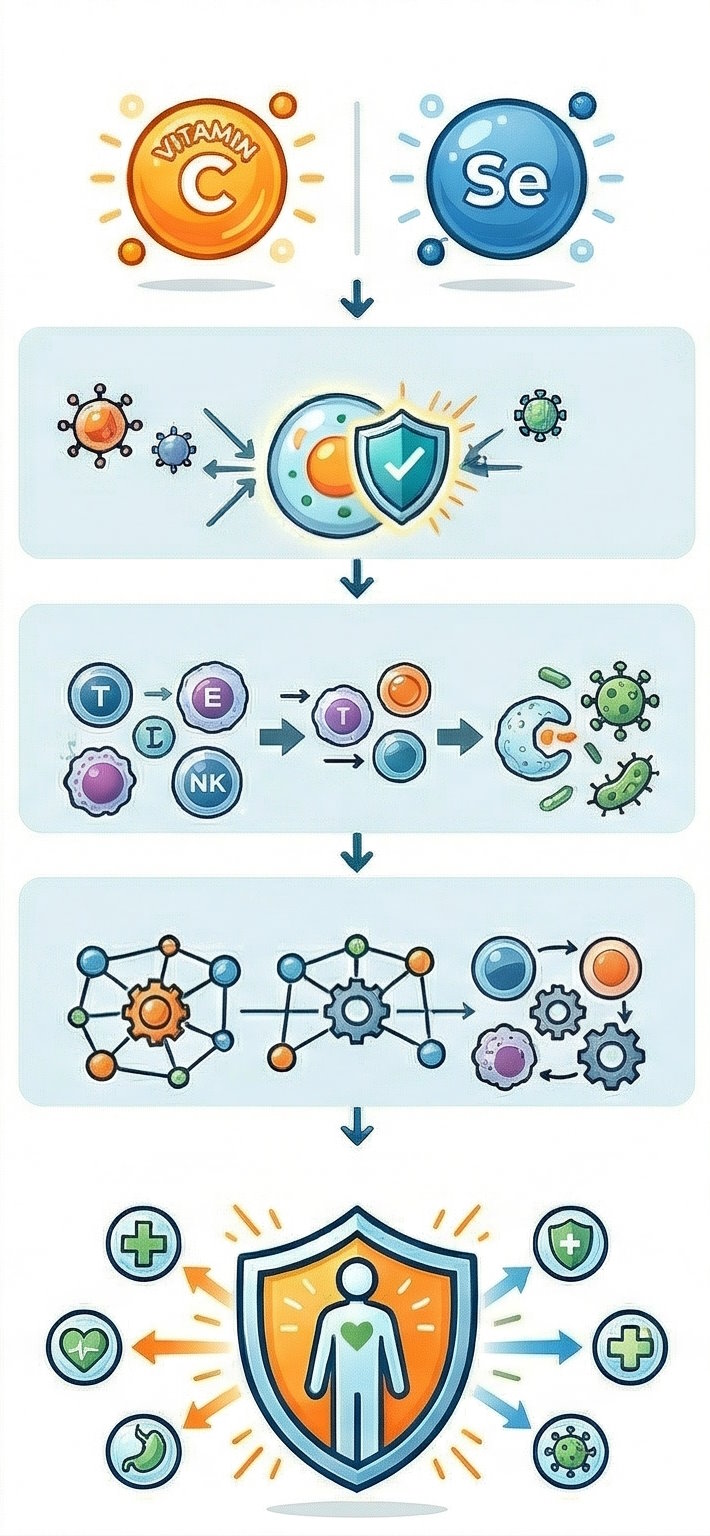 Cellular protection (antioxidant) Free radicals Antioxidant Innate immune activation Coordination of the adaptive response Immune shield
The first line of defence: nourishing our immune cells
To understand the impact of nutrition on our defences, we must first understand how the body reacts to an infection.
When a pathogen bypasses our physical barriers (such as the skin or mucous membranes), the immune system springs into action. The first cells to arrive at the site of infection are phagocytes, such as neutrophils and macrophages. These cells literally act by "eating" the invaders.
The role of Vitamin C on the front line
Vitamin C (ascorbic acid) is not a mere spectator in this process; it is the front-line fuel. In fact, the concentration of vitamin C in white blood cells is up to a hundred times higher than in blood plasma. This massive accumulation has a clear purpose: neutrophils need vitamin C to travel to the site of infection (a process called chemotaxis) and to phagocytose the enemy efficiently.
-
Respiratory burst
This consists of the elimination of pathogenic microorganisms (bacteria, fungi) following phagocytosis.
But the most fascinating function occurs during the destruction of the pathogen. To kill the bacteria they have just engulfed, immune cells generate a massive burst of free radicals and reactive oxygen species, a mechanism known as the "respiratory burst". The problem is that this same toxicity could destroy the white blood cell itself. This is where the high intracellular concentration of vitamin C acts as a protective shield, saving the immune cell from its own attack.
Selenium as the immunological conductor
On the other hand, selenium is an essential trace element that is incorporated into our body in the form of specialised proteins called selenoproteins.
These selenoproteins are crucial for the adaptive immune system, the one that has "memory" and produces antibodies. An adequate level of selenium favours the proliferation of T cells and increases the activity of NK cells (Natural Killers), which are vital for identifying and destroying virus-infected cells.
Furthermore, selenium acts as a regulator of inflammation, ensuring that the immune response is strong enough to eradicate the danger, whilst preventing it from spiralling out of control and damaging healthy tissues.
It is for all these reasons that we can say that both vitamin C and selenium contribute to the normal function of the immune system1,2.
Damage control: the fight against oxidative stress
Every immunological battle and every metabolic process in our mitochondria leaves behind a trail of destruction in the form of oxidative damage. Free radicals, if not neutralised in time, attack cell membranes, functional proteins and DNA itself, accelerating cellular ageing and compromising overall vitality.
It is at this precise moment that the synergy between both nutrients becomes vital. To achieve effective antioxidant protection, the body needs defences in both the aqueous fluids and the fatty structures of the cells.
Vitamin C is water-soluble, which means it effectively patrols the blood, extracellular fluid and cytosol (the watery interior of the cell), catching free radicals on the fly.
For its part, selenium is the structural heart of glutathione peroxidase, a fundamental antioxidant enzyme that disarms highly reactive compounds and protects cellular lipid membranes from the inside.
Both nutrients operate as a network. Moreover, vitamin C helps to regenerate the reduced form of vitamin E3. When vitamin E (a fat-soluble antioxidant that works very closely with selenium in cell membranes) is oxidised after neutralising a free radical, vitamin C donates an electron to "recharge" it and return it to action.
Due to this biochemical mechanism of recycling and neutralisation on multiple fronts, it can be stated that both vitamin C and selenium contribute to the protection of cells from oxidative stress3.
| Characteristic | Vitamin C | Selenium |
|---|---|---|
| Nature | Water-soluble vitamin. | Essential trace element (trace mineral). |
| Area of action | Body fluids, blood and the exterior of the cell. | Interior of the cell and lipid (fat) membranes. |
| Defence mechanism | Direct neutralisation (catches free radicals on the fly). | Enzymatic (forms part of the enzyme glutathione peroxidase). |
| Recycling function | Regenerates oxidised Vitamin E. | Transforms toxic compounds into harmless water. |
Collateral benefits of this synergy
When we provide the body with the exact nutrients to keep its defence system and oxidative balance under control, a "cascade effect" occurs. The energy that the body no longer has to spend putting out inflammatory fires or repairing constant cellular damage is redirected towards the optimisation of other vital systems.
This synergy not only keeps us protected from the outside, but also builds, repairs and energises our internal physiology in several ways.
-
Energy
-
Thyroid function
-
Collagen
-
Male fertility
1. Energy and emotional balance
The immune system is a voracious consumer of energy. During periods of higher demand, it is common to feel profound fatigue. Vitamin C plays a stellar role in managing our cellular energy resources. It is directly involved in the biosynthesis of carnitine, an amino acid derivative essential for transporting fatty acids into the mitochondria, where they are oxidised to produce ATP (our energy currency).
Vitamin C contributes to normal energy-yielding metabolism3 and, consequently, helps to reduce tiredness and fatigue3. Furthermore, at a neurological level, it is a necessary cofactor for the synthesis of key neurotransmitters such as noradrenaline and serotonin, chemical substances that regulate our alertness and mood. Hence, vitamin C contributes to the normal functioning of the nervous system and to normal psychological function3.
We cannot overlook a fundamental metabolic detail: vitamin C increases iron absorption3, especially the non-haem iron present in plant foods. Optimal iron levels are non-negotiable for the transport of oxygen in the blood, which feeds back into that feeling of sustained vitality and energy.
2. The metabolic clock: thyroid function
Selenium, on the other hand, has a collateral target of vital anatomical importance. Surprisingly, the gland with the highest concentration of selenium in the entire human body is not the liver or the heart, but the thyroid.
Our thyroid gland is the thermostat that regulates the metabolic rate of every cell in the body. Selenium is an indispensable component of deiodinase enzymes, which are responsible for converting the inactive thyroid hormone (T4) into its metabolically active form (T3). Without enough selenium, this conversion slows down, causing cellular lethargy. Selenium contributes to normal thyroid function4, ensuring that our internal engine runs at the correct revs.
3. Collagen and skin appendages
Deep health is always reflected on the outside. Although we associate antioxidants with immunity, they are the architects of our physical structure.
Collagen is the most abundant protein in the body, forming a three-dimensional mesh that provides structural support to almost all our tissues. However, collagen fibres cannot assemble correctly without vitamin C, which acts as the essential cofactor for the enzymes that stabilise the collagen molecule (prolyl and lysyl hydroxylases).
This is the reason why vitamin C contributes to normal collagen formation for the normal function of3:
- Skin: Providing firmness, elasticity and delaying the appearance of wrinkles.
- Blood vessels: Maintaining the flexibility of veins and arteries.
- Bones and cartilage: Forming the organic matrix on which minerals are deposited, essential for joint health and cushioning.
- Gums and teeth: Stabilising periodontal tissue.
Whilst vitamin C takes care of connective tissue, selenoproteins act in hair follicles and the nail matrix (where nails are born). By protecting these rapidly dividing cells from external aggressions and free radical damage, selenium contributes to the maintenance of normal hair and nails3, preventing their weakness and brittleness.
4. Reproductive health and spermatogenesis
Finally, oxidative damage is one of the greatest enemies of male fertility, as spermatozoa are extremely vulnerable cells to oxidative stress due to their high content of polyunsaturated fatty acids.
In this sense, selenium contributes to normal spermatogenesis3, as selenoproteins protect the structural integrity of the sperm tail, providing it with the necessary mobility for its biological function.
Summary table by objectives
| Health area | The role of Vitamin C | The role of Selenium |
| Defences and immunity | Protects white blood cells from their own toxicity when destroying pathogens. | Directs and regulates the immune response and antibody production. |
| Skin, hair and structure | Contributes to normal collagen formation for skin, blood vessels and gums. | Contributes to the maintenance of normal hair and nails. |
| Energy and metabolism | Helps to reduce tiredness and fatigue, improving iron absorption. | Contributes to normal thyroid function, the body's energy "thermostat". |
| Cellular health | Protects proteins and fluids against oxidative damage. | Protects DNA and membranes against oxidative damage; contributes to spermatogenesis. |
Frequently asked questions (FAQ)
What is the recommended dose?
To make the most of the synergy of these nutrients without saturating the body's absorption capacity, the recommended dose, in this case of the Anastore food supplement, is 1 capsule a day. Ideally, it should be taken with half a glass of water during breakfast. By ingesting it with food at the beginning of the day, we accompany the body's natural metabolic rhythm and optimise the assimilation of both vitamin C (which supports daily energy) and selenium.
How long does it take to notice the effects?
Human physiology requires time to restore its optimal levels, and times may vary depending on the initial nutritional status of each person. According to our experience, the process is generally divided into two phases:
- Short term (1 to 2 weeks): The effects related to vitamin C, such as a slight improvement in daily vitality and a reduction in the feeling of tiredness and fatigue, are the first to manifest themselves due to its rapid action on energy metabolism.
- Medium term (3 to 6 weeks): Structural and deep regulation benefits, such as the strengthening of hair and nails, the modulation of the immune response and the support for thyroid function mediated by selenium, require respecting the natural cycles of cell renewal. It is usual to notice these changes more solidly after a month of regular intake.
Are there any contraindications?
Consumption in the form of a food supplement is safe provided the label instructions are followed. In addition, there are certain standard precautions that we must take into account:
- Age: It is designed only for adults. Its use is not recommended for children and adolescents, as their nutritional requirements are different.
- Pregnancy and breastfeeding: As a universal precautionary measure, pregnant or breastfeeding women are recommended to consult their healthcare professional before adding any supplement to their routine.
- Ongoing medical treatments: If you are under any prescribed medical treatment, it is essential to consult your therapist or specialist doctor beforehand to avoid any possible biological interaction.
- Dose: The recommended daily dose should never be exceeded, since in cellular nutrition, "more" does not necessarily mean "better"; balance is the key.
Bibliography
- Carr, A. C., & Maggini, S. (2017). Vitamin C and Immune Function. Nutrients, 9(11), 1211. A comprehensive review of how vitamin C accumulates in phagocytic cells and enhances chemotaxis and respiratory burst.
- Hoffmann, P. R., & Berry, M. J. (2008). The influence of selenium on immune responses. Molecular nutrition & food research, 52(11), 1273-1280. Detailed analysis on the indispensable role of selenoproteins in the modulation of the innate and adaptive immune system.
- COMMISSION REGULATION (EU) No 432/2012 of 16 May 2012 establishing a list of permitted health claims made on foods, other than those referring to the reduction of disease risk and to children's development and health.
- Köhrle, J. (2015). Selenium and the thyroid. Current Opinion in Endocrinology, Diabetes and Obesity, 22(5), 392-401. Fundamental study on how the thyroid is the organ with the highest concentration of selenium and its role in deiodinase enzymes.
- Pullar, J. M., Carr, A. C., & Vissers, M. (2017). The Roles of Vitamin C in Skin Health. Nutrients, 9(8), 866. Research on vitamin C-dependent collagen regulation and its preventive role in cutaneous photodamage.
About the author
Content researched and written by the Anastore editorial team.
Reviewed and verified against scientific literature by our Nutrition and Research Department.
Find out more about our editorial policy and scientific rigour.

This article is strictly for informational purposes and does not replace the advice of a healthcare professional.