Can ginkgo biloba help our memory as we get older?
 You walk into a room with a clear purpose and suddenly stop because you have forgotten exactly what you went in for. Or you are enjoying a pleasant chat, telling an anecdote, and suddenly you are left with that annoying feeling of having a word "on the tip of your tongue", unable to remember the name of that place you visited or that old acquaintance. Sometimes, you simply notice that it takes a bit more effort to follow a complex text or that you need more peace and quiet to concentrate on tasks you used to do almost on autopilot.
If you are in your fifties, sixties, or beyond, it is completely normal for these little situations to become increasingly familiar. And the first thing you should know is that there is no reason for alarm. In the vast majority of cases, these lapses are not a sign of any serious illness, nor do they indicate that you are losing your faculties. It is simply life. It is the biological reflection of the passage of time and the natural wear and tear that every human body goes through.
As we add years to our lives, our physiology changes, and our brain is no exception. However, just because it is a natural process does not mean we must resign ourselves to it. Today we know that we are not defenceless against the passage of time and that there are allies in nature that can provide us with fundamental support.
Let's take a look at ginkgo biloba, and discover if it can help our memory and cognitive function as we get older.
Why does our memory change as we get older?
To understand how we can help our minds, we must first understand what happens to them as we age.
Our brain is the most demanding organ in our entire body
Imagine it is like the engine of a high-performance car: although it accounts for barely 2% of our total body weight, it consumes no less than 20% of all the energy, oxygen, and glucose circulating through our system.
This "engine" does not have internal batteries to store energy reserves long-term; it depends absolutely and constantly on blood flow. It needs blood to flow continuously to every last corner of its structure.
From the age of forty-five or fifty, the entire network of blood vessels in our body begins to experience changes. The walls of our veins and arteries, which in our youth were highly elastic and flexible, gradually begin to become stiffer. Furthermore, the network of cerebral microcapillaries, tiny vessels much finer than a human hair, can lose some of their efficiency. It is a very silent process of vascular ageing.
When this microcirculation loses its fluidity, the brain receives its "fuel" somewhat more slowly. When less oxygen arrives immediately in response to a stimulus, it is completely logical that our neurons take a fraction of a second longer to communicate with each other. It is then that we notice we have lost a little mental agility or that it takes more effort to retain new information. It is not that we have lost intelligence; it is, purely and simply, a matter of cellular energy supply.
How could Ginkgo biloba help us?
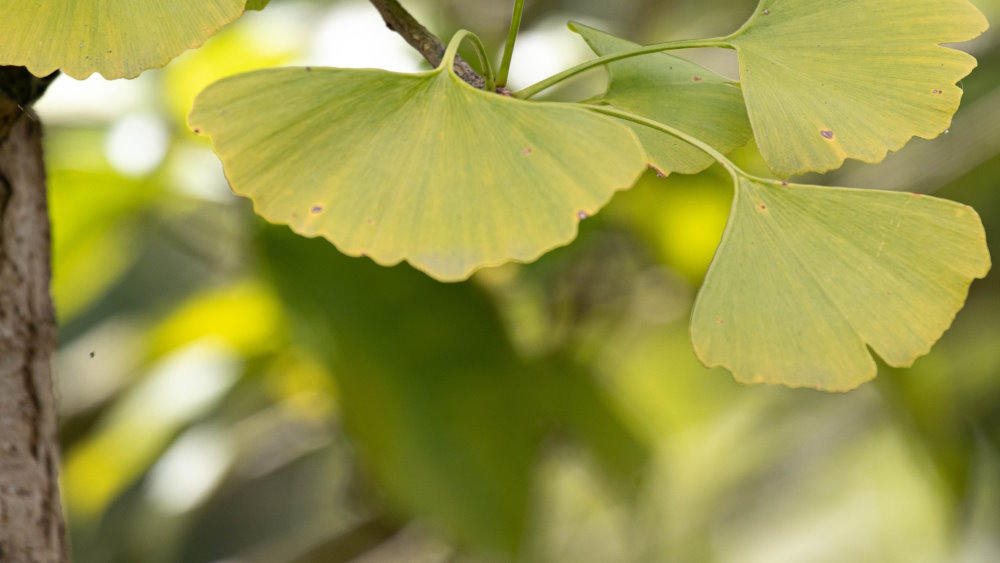
It has been discovered that ginkgo leaves contain a combination of nutrients that nature designed to protect the tree itself, but which turn out to be extraordinarily compatible with human physiology.
These compounds fall into two main families that work together to look after our brain: flavonol glycosides (which we usually just call flavonoids) and terpene lactones.
Flavonoids and their antioxidant action against the wear and tear of time
You have surely heard of "oxidation" or "free radicals". To understand it simply, imagine an apple cut in half that turns brown when exposed to the air, or a bicycle that starts to rust in the rain. Something very similar happens in our cells simply by breathing and living. Our body generates free radicals, unstable molecules that, over the years, oxidise and wear down the membranes of our neurons.
-
The flavonoids present in ginkgo leaves are substances with powerful antioxidant properties¹.
They act as a protective shield, intercepting these free radicals and neutralising them before they can "oxidise" and damage the delicate connections in our brain. This protective effect is key to slowing down daily neuronal wear and tear.
Terpenes: clearing the way for blood circulation
On the other hand, we have terpene lactones. As we age, not only do our blood vessels become stiffer, but the blood itself can become slightly thicker, making it harder for it to pass through the cerebral microcapillaries.
These terpenes have the ability to positively influence blood fluidity². They help prevent blood cells from clumping together excessively and favour the dilation of small vessels.
-
By improving fluidity, terpenes enable blood to circulate much more freely and easily.
By restoring to the brain that optimal supply of oxygen and glucose it demands, our neurons regain the energy needed to work at a good pace.
When should you start taking ginkgo biloba? Prevention and maturity
One of the big questions that arises when we talk about looking after our memory is: "When is the right time to start worrying about it?". The answer is clear: prevention is always the smartest and most effective strategy.
We should not wait until forgetfulness is constant or seriously interferes with our quality of life to start looking after our neurovascular health.
People in middle age, around fifty or sixty, are in a golden window of opportunity to start nourishing their brain and building what is known as a cognitive reserve.
Active ageing is precisely about taking charge of our health before serious problems arise. The regular use of extracts from this plant is designed for this purpose.
By nourishing our circulatory system when we first begin to notice those very early and subtle signs of mental fatigue, we are providing our body with invaluable support. Research confirms that providing these botanical nutrients is a great help in maintaining memory against the natural decline of age and in successfully preserving cognitive function in the long term. It is a way of investing today in our independence, autonomy, and peace of mind for tomorrow.
-
Ginkgo biloba can help maintain adequate brain performance in older people³.
What is the best way to take ginkgo biloba? The importance of quality
When we support our microcirculation, the benefits are not only measured in the long term; they are also felt on a daily basis. Reaching maturity should be synonymous with enjoying life to the full, being able to learn new things, enjoying deep reading, continuing to manage our tasks, and maintaining rich and detailed conversations.
By ensuring our neurons are well oxygenated and protected against oxidation, we are actively contributing to all our mental and cognitive activities. Having a well-nourished brain makes it vastly easier for us to retain and remember everyday facts, from the shopping list to the details of a story we have just been told.
Feeling mentally agile restores our confidence. The physiological support provided by Ginkgo helps us to keep our thinking clear and maintain our focus day to day, banishing that feeling of "brain fog" or sluggishness that sometimes accompanies us in the afternoons.
However, we must be very careful with what we consume. There is no point in taking a diluted infusion or buying products that do not specify their exact composition. Scientific rigour demands precise proportions.
To ensure we receive the proper nutritional support that a mature brain demands, it is necessary to turn to high-quality food supplements. Ideally, opt for those that incorporate a rigorously standardised Ginkgo biloba leaf extract.
Standardised ginkgo biloba extract
Standardisation is the laboratory guarantee that each dose contains exactly the necessary amount of flavonoids and terpene lactones to be biologically effective, as well as guaranteeing that the product is free from impurities or unwanted components of the raw plant.
Ultimately, taking care of our mind in later life is an act of self-care that requires a holistic approach. We must go for walks to keep our heart strong, eat a balanced and nutritious diet, get the necessary hours of sleep so the brain can "cleanse" itself during the night, and challenge ourselves intellectually by reading or socialising. Integrating the botanical extracts at our disposal into this healthy lifestyle routine is the perfect finishing touch to ensure that, no matter how many birthdays we celebrate, our mind remains our best and brightest refuge.

Side effects and contraindications
At the doses recommended on the label, ginkgo biloba is a naturally sourced ingredient that is generally very well tolerated by the adult population. However, in some individuals with greater digestive sensitivity, it could occasionally cause mild side effects such as minor stomach upsets, occasional headaches, or passing dizziness. These symptoms are usually linked to the body adapting to the subtle, beneficial changes in blood flow. Because its primary mechanism of action is to improve blood fluidity and viscosity, it is essential never to exceed the stated daily dose.
Who should not take it?
There are specific cases where its consumption should be avoided. It is strictly contraindicated for individuals undergoing treatment with anticoagulant or antiplatelet medications, as it could increase the risk of bleeding. Its use must also be stopped at least two weeks before undergoing any surgery. As a general precaution, it is not recommended for people with epilepsy. If you suffer from any chronic condition, you should always consult your doctor before taking it.
Bibliography
- Efficacy and adverse effects of ginkgo biloba for cognitive impairment and dementia: a systematic review and meta-analysis - Hashiguchi, M., Ohta, Y., Shimizu, M., Maruyama, J., & Mochizuki, M. (2015). Journal of Alzheimer's Disease.
- Ginkgo biloba for cognitive impairment and dementia - Birks, J., & Evans, J. G. (2009). Cochrane Database of Systematic Reviews.
- Extracted from the EFSA health claims application list, under evaluation (ID 2369).
About the author
Content researched and written by the Anastore editorial team.
Reviewed and verified against scientific literature by our Nutrition and Research Department.
Find out more about our editorial policy and scientific rigour.

This article is strictly for informational purposes and does not replace the advice of a healthcare professional.