Lemon balm and valerian: sleep support when stress won't let you rest
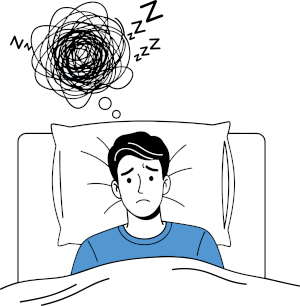 We've all been there: you get into bed feeling immense physical exhaustion, but as soon as your head touches the pillow, your thoughts start racing at a hundred miles an hour. You stare at the ceiling, toss and turn, and suddenly, frustration adds to the exhaustion.
The human brain doesn't have an instant "off" switch. To transition from a state of alertness to deep sleep, the nervous system needs a decompression phase that should begin about two hours before going to bed. If you are sending emails or going over the day's problems at nine o'clock at night, your brain still believes it's midday.
Here is a summary of how botany helps you regain control of your sleep, and we will delve into it below:
| Focus | Problem | Proposal | The Physiological Effect |
|---|---|---|---|
| Mental chatter | Stress accelerates the mind and destroys GABA rapidly | Lemon Balm Extract | Halts the destruction of GABA, inducing natural calm |
| Lack of sleep | The body fails to transition into deep sleep | Valerian Extract | Prepares brain receptors to shorten the time it takes to fall asleep |
| Efficacy | Traditional infusions have variable and unreliable doses | Standardised Extracts | Guarantee the exact amount of active ingredients in each dose |
Did you know...?
Going 24 hours without sleep, or accumulating a severe sleep debt due to stress over several days, reduces your attention span, reaction time, and memory to the same level as having a 0.10% blood alcohol concentration7
Nightly rest is one of the most important processes for our physical and mental health. However, sleeping poorly has become the norm for many people. We often look for quick fixes to "drop dead" asleep, without understanding that sleep is not a passive state we simply fall into, but an active and highly regulated process.
To understand why it is sometimes so difficult to fall asleep and how certain plants like lemon balm and valerian can help us naturally, you don't need to be a neurologist. You just need to imagine our body as an orchestra that sometimes loses its rhythm.
Why can't I sleep? The regulation of cortisol and melatonin
In the centre of our brain we have a small group of cells that acts as our master biological clock. This clock is primarily guided by light and dark to tell the body which hormones it should produce at any given time of day.
The two main protagonists of this story are cortisol and melatonin. We could view them as our body's accelerator and brake.
-
Cortisol: the natural accelerator
Cortisol is necessary. In the morning, its levels rise to wake us up, give us energy, and prepare us for action. It is our natural accelerator.
-
Melatonin: the nocturnal brake
Melatonin is the hormone of darkness, our brake. Its job is to slowly rise at dusk to tell the nervous system that it is time to wind down.
How chronic stress blocks our rest
On a normal, calm day, cortisol rises in the morning and gradually decreases until it almost completely disappears at night, giving way to melatonin.
The problem arises when our lifestyle keeps us in a constant state of alert. Traffic, rushing, mobile phone notifications, and financial worries send a clear message to our brain: "we are in danger". Faced with this, the adrenal glands keep pumping out cortisol late into the day.
| Element | In a stress-free body | In a body with chronic stress | Physical result |
|---|---|---|---|
| Cortisol (the accelerator) | High in the morning, very low at night. | Remains elevated during the afternoon and evening. | Muscle tension, racing mind. |
| Melatonin (the brake) | Begins to rise at dusk | Cannot rise because cortisol blocks its effect. | Inability to fall asleep at a normal time. |
The result is nocturnal hyperarousal. Your eyes are heavy, but your brain is ready to flee from an invisible predator.
This is where the natural chemistry of some plants offers us a mechanism to bring those revs down without needing to force an aggressive chemical blackout in the body.
Lemon balm to calm and turn down the volume of mental chatter
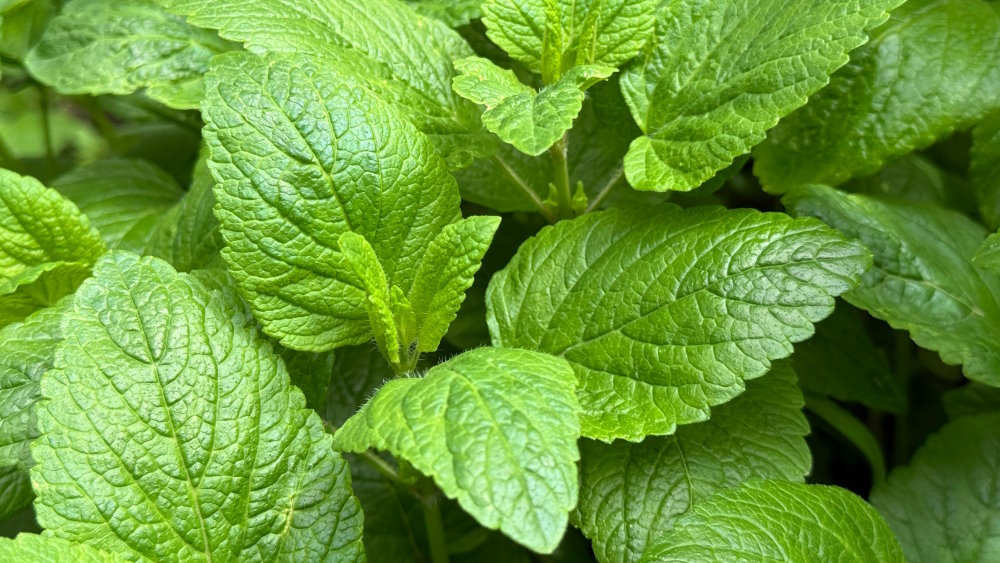
Melissa officinalis, also known as lemon balm, is a plant from the mint family that smells slightly of lemon. Traditionally it has been taken as an infusion to calm the nerves, and now modern science has discovered exactly what happens in our brain when we consume it.
The key lies in a group of natural substances called hydroxycinnamic acids, and most especially in rosmarinic acid. To understand its effect, we need to talk about GABA.
What is GABA and why is it key to calming us down
GABA (gamma-aminobutyric acid) is a neurotransmitter, a chemical messenger in our brain. Its main function is to act as a natural relaxant. If stress is the radio volume turned up to the max, GABA is the hand that turns the dial to lower the music.
Normally, the brain produces GABA to calm us, but then uses an enzyme (a sort of cellular "rubbish lorry") to clean it up and recycle it quickly.
Studies have observed that the rosmarinic acid in lemon balm is capable of slowing down that "rubbish lorry"1.
-
By slowing down the clearance of GABA, this molecule of calm stays active in our brain for longer.
Lemon balm: preparing the ground for better sleep
-
Lemon balm helps to decrease restlessness and irritability2
It won't make you suddenly fall asleep in your office chair, but if you take it in the afternoon, it helps the tension accumulated during the working day begin to dissipate.
By removing that layer of nervous tension, lemon balm contributes to a good and peaceful rest3, preparing the physical and mental ground so that sleep arrives smoothly and without resistance.
How valerian helps you fall asleep

If lemon balm is responsible for clearing mental noise in the afternoon, Valeriana officinalis comes into play just at the moment we need to cross the threshold into sleep.
The root of this plant has a peculiar (and very characteristic) odour due to its essential oils and compounds called valerenic acids.
While lemon balm helps ensure there is more GABA floating in the brain, valerian does something different: it works directly on our brain's "receptors".
Valerian: the natural sleep switch
Imagine that GABA is a key and the brain is a lock. Sometimes, because of stress, the lock is stiff and the key doesn't turn well. The valerenic acids in valerian bind to that lock and lubricate it, making it much easier for the GABA key to enter and turn4.
The physiological result of this is very direct. It naturally shortens what is known as "sleep latency", which is simply the minutes we spend tossing and turning in bed until we fall asleep.
-
Valerian helps you fall asleep5 effectively
Valerian helps maintain restful sleep without feeling groggy the next day
One of the big problems with looking for aggressive chemical shortcuts to sleep is that they alter the way we sleep. Healthy sleep has cycles: we go from light sleep to deep sleep (where the body repairs itself) and then to REM sleep (where we dream and the mind processes emotions).
Often, by forcing rest, we break these cycles, which is why we wake up the next day feeling groggy, heavy, or with a mental "hangover".
The interesting thing about valerian root is that it helps maintain natural sleep6. It doesn't forcefully switch off the brain; rather, it makes it easier for our own body to initiate and maintain its normal sleep cycles. Thus, rest fulfils its true restorative function.
How to take lemon balm and valerian and why together is better than apart
In nature, sometimes one plus one doesn't equal two, but three. This is what in biology is called synergy: when two elements work together, their combined effect is much more comprehensive than if they acted separately.
If we think about it, the difficulty sleeping caused by stress has two parts: we can't relax the mind (the background noise) and we can't initiate sleep (the switch).
By combining both plants, we tackle sleep disruption from both neural fronts of the same circuit:
-
Lemon balm
Lemon balm slows the destruction of our calming molecule, ensuring there is a sufficient amount available to relax the body.
-
Valerian
Valerian prepares the brain's locks so that this molecule acts as quickly and efficiently as possible just as we get into bed.
Why choose standardised extracts of lemon balm and valerian over infusions
You're probably thinking of the classic teabag. Preparing a hot tea before bed is an excellent and relaxing habit in itself, but on a biochemical level, it has certain limitations.
The amount of rosmarinic acid or valerenic acids in a plant's leaves varies hugely depending on where it was grown, how much it rained, or how it was dried. One night the infusion might have a high dose of active ingredients and the next night, almost none.
For our nervous system to receive a clear and constant signal, we must use extracts. The extraction process isolates and concentrates the molecules we are interested in. When looking for a combination of lemon balm and valerian, the ideal choice is to opt for standardised extracts. Standardisation is simply the guarantee that each dose contains exactly the same percentage of active ingredients, thus achieving a constant and predictable effect on our physiology.
Habits for maintaining good sleep hygiene
Thinking that we can take a botanical supplement while continuing to stare at a bright screen inches from our face is a common mistake. Lemon balm and valerian are physiological aids, but they need us to provide the right context to work. Sleep hygiene is the foundation of any rest routine.
- Beware of blue light: Mobile phone, tablet, and computer screens emit a light that tells our brain it's broad daylight. This destroys the natural production of melatonin. Try to put your devices away at least an hour before sleeping.
- Thermal regulation: The onset of sleep requires a slight drop in core body temperature (approximately 0.5 to 1 degree Celsius). Bedrooms above 21 degrees can hinder this physiological transition.
- Light digestion: Eating a heavy or very late dinner causes blood to pool in the stomach and raises body temperature. Heavy digestion is one of the biggest enemies of deep rest.
Ultimately, regaining the ability to sleep isn't about forcefully shutting the body down. It's about understanding our own signals, reducing the daily stress load, and using the tools that botany offers us to restore that natural balance we've lost along the way.
How long does it take for lemon balm and valerian to work? These are the phases
One of the most frequent questions is how long it takes to take effect and what exactly is felt in the body. We must be clear that these plants do not act as a chemical switch that suddenly "turns off" the nervous system, but rather they accompany your physiology in a natural and progressive transition towards rest. To ensure this temporal progression occurs predictably night after night, maintaining a consistent routine is key.
Below, we detail how your body processes these botanical compounds phase by phase:
Phase 1: Nervous decompression (1 to 2 hours after taking)
-
The biological mechanism: Lemon balm compounds begin to act on the central nervous system, slowing the degradation of the relaxing neurotransmitter GABA.
-
What you feel: You will not experience sudden drowsiness or immediate heavy eyelids. What happens is a progressive reduction in the speed of "mental chatter". Physically, it is common to notice that tension accumulated in the jaw, neck, or shoulders begins to ease. Here, the plant fulfils its function of decreasing restlessness and irritability, helping your mind disconnect from daytime stress.
Phase 2: The landing (Upon getting into bed)
-
The biological mechanism: Valerian essential oils come into action, interacting directly with neural receptors to prepare the physical ground for rest.
-
What you feel: When you turn off the light and close your eyes, the transition from wakefulness to sleep is perceived as much smoother. The time you would normally spend tossing and turning in bed (clinically known as sleep latency) is naturally shortened. You manage to fall asleep without the frustration of feeling that your mind is still working.
Phase 3: Sleep maintenance (During the night)
-
The biological mechanism: The joint synergy of both plants helps stabilise neural activity, respecting the brain's Non-REM and REM phases.
-
What you feel: You achieve more stable and peaceful rest. It is completely normal to have brief micro-awakenings during the night (for example, when changing position), but the difference is that your brain doesn't "hook" onto a thought that keeps you awake, allowing you to easily link back into the next sleep cycle.
Phase 4: Waking up with clarity (The next morning)
-
The biological mechanism: The phytochemicals have been completely metabolised, respecting the architecture of natural human sleep.
-
What you feel: Unlike aggressive synthetic solutions that often leave a feeling of grogginess, heaviness, or "mental hangover", waking up after rest supported by this botanical synergy allows you to regain cognitive clarity from the very first minute. The body is rested and ready for morning cortisol to raise your energy levels healthily.
Precautions and contraindications of lemon balm and valerian
Although the use of these plants has an excellent food safety profile for the majority of adults, there are certain logical precautions stemming from their inherent relaxing nature.
Their consumption is not indicated during pregnancy or breastfeeding, as there are not enough clinical trials to support their use during these periods.
Given that their main function is to act as a nervous system relaxant and reduce the time needed to fall asleep, they should not be consumed before driving vehicles or operating machinery that requires absolute alertness. Finally, due to their interaction with GABA receptors, they should not be mixed with alcoholic beverages or combined with sedative, antidepressant, or anxiolytic medications (such as benzodiazepines) without prior consultation with a doctor, to avoid excessively enhancing drowsiness.
Bibliography
- Modulation of mood and cognitive performance following acute administration of Melissa officinalis (lemon balm). Kennedy, D. O., Scholey, A. B., Tildesley, N. T., Perry, E. K., & Wesnes, K. A. (2002). Pharmacology Biochemistry and Behavior, 72(4), 953-964.
- Extracted from the EFSA health claims application list, under evaluation (ID 2302).
- Extracted from the EFSA health claims application list, under evaluation (ID 2087).
- Valerenic acid potentiates and inhibits GABA(A) receptors: molecular mechanism and subunit specificity. Trauner, G., Khom, S., Baburin, I., Benedek, B., Hering, S., & Kopp, B. (2008). Neuropharmacology, 54(1), 122-128.
- Extracted from the EFSA health claims application list, under evaluation (ID 2348).
- Extracted from the EFSA health claims application list, under evaluation (ID 4222).
- Fatigue, alcohol and performance impairment. Dawson, D., & Reid, K. (1997). Nature, 388(6639), 235-235.
About the author
Content researched and written by the Anastore editorial team.
Reviewed and verified against scientific literature by our Nutrition and Research Department.
Find out more about our editorial policy and scientific rigour.

This article is strictly for informational purposes and does not replace the advice of a healthcare professional.