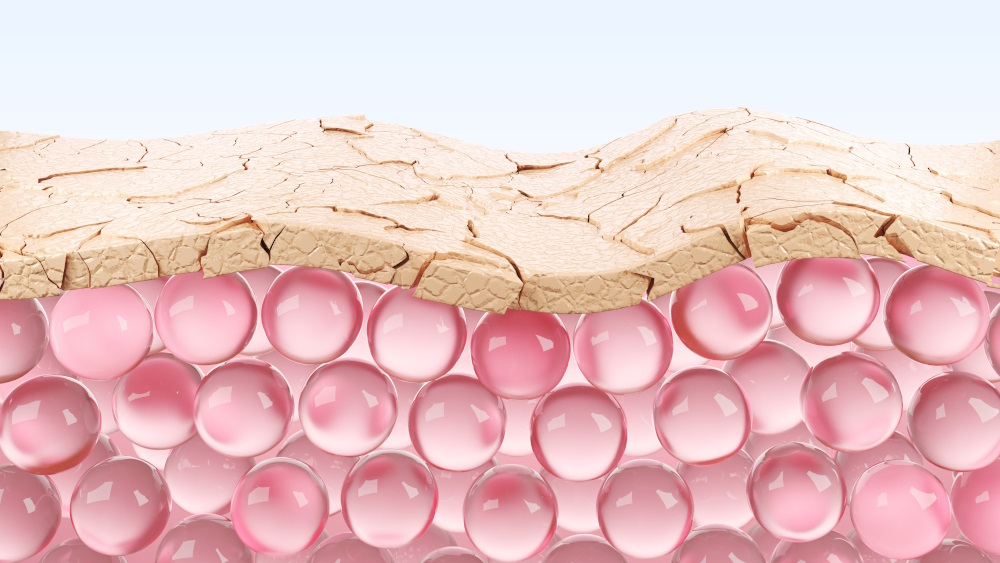
Exposome and skin: causes of dull skin and how to nourish it from within
Imagine a typical day in your routine. You wake up, perhaps just in time, have breakfast, and head out. Your face is suddenly exposed to the cold or dry morning air, then to urban traffic emissions whilst commuting, to solar radiation when walking, and finally, to artificial light and air conditioning in your workplace for eight long hours.
Upon returning home, you look in the mirror and notice an unmistakable sensation: your skin feels tight at the end of the day, with a rough texture, visible pores, and an obvious lack of radiance.
This does not happen simply because your face needs an extra layer of cream or a splash of water on the surface. The causes of dull and tired skin lie in environmental wear and tear that depletes your cells' internal reserves. To attempt to tackle this recurring problem, we must first understand what we are truly facing from the moment we step out the front door.
What the skin exposome is and why it weakens your face
Did you know…?
Your genetics only determine approximately 25% of how your face ages. The remaining 75% depends on your environment, where you live, and your daily lifestyle1.
For a long time, it was believed that the mere passing of years was the sole cause of loss of firmness, the appearance of wrinkles, and the lack of radiance. However, modern science has shown that the internal biological clock has much less influence than we thought. Today, dermatologists, biologists, and skin health experts focus their research on a fundamental concept: the exposome2.
If you have ever wondered what the skin exposome is, the definition is simple yet highly revealing:
-
Exposome
It is the sum of all external factors (environmental and lifestyle) to which we are exposed throughout our lifetime and, more importantly, how our body biologically reacts to them.
Our epidermis acts as the body's protective shield, the non-negotiable physical border between us and the outside world. Due to its barrier position, it is the organ that receives the first and greatest impact of this exposome. When this exposure is very intense, constant, or several factors combine at once (for example, living in a polluted city and getting little sleep), the skin's natural defences are overwhelmed. It is precisely at this physiological turning point that oxidative stress in the skin is triggered.
To easily visualise this oxidative stress, think of an apple cut in half that you leave forgotten on the kitchen table. Upon coming into contact with oxygen in the air, it quickly oxidises and turns brown. A similar biological process occurs microscopically in our bodies: external aggressions generate unstable molecules called free radicals. These radicals act like a silent "rust" that constantly attacks, inflames, and wears down our healthy cells, diminishing their capacity for regeneration.
Factors that age the skin
The purely urban environment and our current fast-paced lifestyle are the main culprits behind this cellular wear. Identifying the factors that age the skin in our daily lives is the first essential step to neutralising them.
Solar radiation and light (UV)
Historically, this is the most studied environmental factor. Ultraviolet rays penetrate down to the dermis, generating a massive amount of free radicals that alter cell DNA and directly break down support fibres. The visible result of this damage is dark spots, an uneven tone, and the dreaded premature photoageing.
Air pollution
Suspended microparticles (known as PM2.5) from traffic and industry are so tiny that they manage to slip through the pores. Once inside the skin, they irritate the tissues and trigger an invisible cascade of chronic inflammation. This is the main answer to how to protect the skin from pollution: we need internal allies to help counteract this underlying damage that progressively turns the skin more greyish and dull.
Stress and daily rushing
Living in a state of constant alert and tension triggers cortisol production. When this hormone remains elevated over time, it alters peripheral blood flow and weakens the skin's immune system, ultimately causing severe dryness and sensitivity flare-ups.
The lack of restorative sleep
It is during sleeping hours that the body actively repairs the damage suffered throughout the day. Sleeping little or having fragmented sleep drastically slows down the production of hormones vital for cellular regeneration, translating into very pronounced dark circles, rough texture, and skin that simply cannot recover from daily wear and tear.
Composition of the skin barrier
Our skin is structured in several overlapping layers, but the true layer responsible for maintaining firmness, elasticity, and deep hydration is the middle layer, called the dermis.
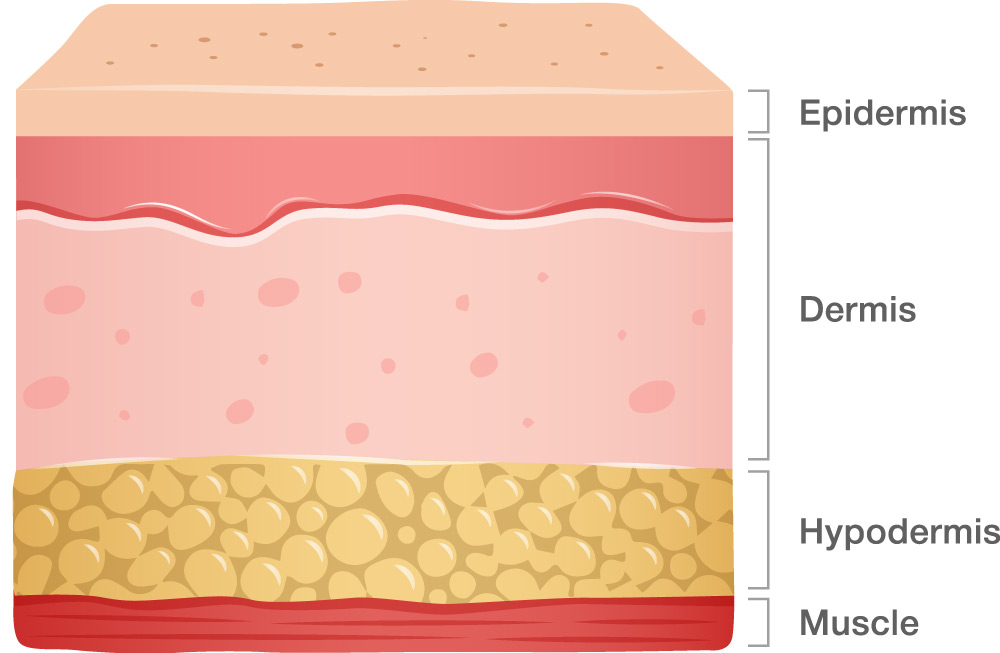
We can imagine the dermis as a mattress made of an intricate network known as the extracellular matrix.
- Collagen: Acts exactly like the metal springs of a mattress. It provides tensile strength, firmness, and overall structure. If these "springs" are strong, intact, and dense, the mattress does not sink under pressure.
- Elastin: Represents the flexibility of those springs. It is the specific protein that allows the skin to quickly return to its original shape and position after gesturing, smiling, or stretching.
- Hyaluronic acid: It is the soft, fluffy filling that envelops, protects, and cushions the springs. Its biological function is to trap water molecules, keeping the mattress hydrated, voluminous, and visibly plump.
The biggest problem with free radicals derived from pollution and stress is that they act like tiny microscopic scissors. They slowly cut the collagen springs and degrade the hyaluronic acid filling. Furthermore, the cells responsible for producing these key components (fibroblasts) become deeply exhausted by environmental stress and slow down their work rate.
The physiological result is clear and visible: the "mattress" loses thickness, is unable to retain water, and the superficial protective barrier is greatly weakened. If your goal is to restore the altered skin barrier, the main focus must be providing the body with the exact tools to rebuild this structural support from the foundation.
Nutricosmetics for the skin: Why creams are not always enough
Looking after the surface of the face is, and always will be, fundamental. Gentle and respectful cleansing, the daily use of sunscreen (even in winter), and a good moisturiser are non-negotiable hygiene habits. However, these actions are equivalent to painting, cleaning, and maintaining the façade of a building whose foundations might be weakening.
Traditional cosmetics are applied to the outermost cellular layer, which is designed by nature to function as an impenetrable wall, specifically preventing foreign substances from entering the body. If we truly want to reach the deep dermis to repair those damaged "springs" and plump the extracellular matrix, we need to send the building materials from within the body.
This is exactly where nutricosmetics for the skin can support traditional care. Through targeted oral nutrition and well-formulated supplements, active compounds travel through the bloodstream to reach the finest capillaries. These tiny blood vessels supply the dermis from the bottom up, delivering nutrients and vitamins directly to the cells at their exact workplace, a depth level that topical creams rarely manage to reach effectively3.
Structural ingredients: Oral collagen and hyaluronic acid
At Anastore, we work on developing comprehensive formulas for skin support that address the problem from the root, such as the combination of ingredients present in Anaskin, where we specifically aim to combine structural elements with botanical ones. To understand the true value of this approach, let us analyse what each component biologically brings to your skin.
Collagen
Collagen in its natural state is a protein that is too large and complex for the human digestive system to assimilate and utilise directly. Therefore, nutritional science uses hydrolysed collagen (frequently extracted from marine sources due to its excellent bioavailability and similarity to human collagen). This delicate technological process divides the large protein into small, manageable fragments (peptides) that the intestine absorbs with great ease.
Once circulating in the blood, these peptides reach the dermis fulfilling a dual biological mission: on the one hand, they provide the physical "building blocks" (amino acids) to assemble new fibres; on the other, they send chemical signals to the skin cells, stimulating them to promote their own production of natural collagen.
Oral hyaluronic acid
For its part, the intake of oral hyaluronic acid acts as a magnet for deep hydration. Upon assimilating and reaching the skin's connective tissue, its hygroscopic capacity (that is, its natural ability to attract and bind large amounts of water molecules around it) promotes the structural rehydration of the extracellular matrix. This can support tissue viscoelasticity, helping to alleviate that uncomfortable feeling of tightness that appears mid-afternoon.
Vitamins to protect the skin and antioxidant extracts
It is essential to provide vitamins to protect the skin and botanical cofactors that act synergistically against free radicals.
Vitamin C
We often associate vitamin C (ascorbic acid) almost exclusively with strengthening the body's general defences during the winter months.
-
Vitamin C contributes to normal collagen formation for the normal function of skin4,5.
It works as a sort of cellular glue that keeps newly formed collagen strands united and stable.
Coenzyme Q10
Natural levels of Coenzyme Q10 inevitably decrease with chronic stress, pollution, and the passing of years, so replenishing it supports tissue recovery and helps mitigate signs of cellular fatigue.
Bilberry extract (anthocyanidins)
Dry extract of bilberries (Vaccinium myrtillus) provides great antioxidant power. Anthocyanidins are known for their antioxidant properties, which can support the comfort of skin microcirculation. By ensuring a greater amount of oxygen and clean nutrients reaches the skin cells, that greyish, dull tone is progressively reduced, allowing the face to regain its natural radiance.
Side effects and precautions for use
The regular use of nutritional supplements formulated with hydrolysed collagen peptides, hyaluronic acid, vitamin C, and botanical extracts like bilberry, stands out for its high safety profile in the general population. Because these are nutrients and vitamins that the body naturally recognises and metabolises during digestive processes, as long as the daily doses indicated by the manufacturer are strictly respected, side effects are extremely rare.
In individuals with a particularly sensitive or unaccustomed digestive system, mild transient discomfort could very occasionally appear, such as a slight feeling of stomach heaviness or temporary variations in intestinal transit during the first few days of adapting to the product. Adverse allergic reactions are rare, although possible in those with a known prior hypersensitivity to red berry extracts or specific protein sources.
Bibliography
- The skin aging exposome. Krutmann, J., Bouloc, A., Sore, G., Bernard, B. A., & Passeron, T. (2017). Journal of Dermatological Science, 85(3), 152-161.
- Clinical and biological impact of the exposome on the skin. Passeron, T., Krutmann, J., Andersen, M. L., Katta, R., & Zouboulis, C. C. (2020). Journal of the European Academy of Dermatology and Venereology, 34(S4), 4-25.
- Bioactive Compounds for Skin Health: A Review. Michalak, M., Pierzak, M., Kręcisz, B., & Suliga, E. (2021). Nutrients, 13(1), 203.
- The Roles of Vitamin C in Skin Health. Pullar, J. M., Carr, A. C., & Vissers, M. C. M. (2017). Nutrients, 9(8), 866.
- COMMISSION REGULATION (EU) No 432/2012 of 16 May 2012 establishing a list of permitted health claims made on foods, other than those referring to the reduction of disease risk and to children's development and health.
About the author
Content researched and written by the Anastore editorial team.
Reviewed and verified against scientific literature by our Nutrition and Research Department.
Find out more about our editorial policy and scientific rigour.

This article is strictly for informational purposes and does not replace the advice of a healthcare professional.