Can Ceylon cinnamon help to control blood sugar?
 Do you feel extreme fatigue or a sudden "energy slump" shortly after eating a good plate of pasta? Do you struggle to control sweet cravings mid-afternoon, noticing that your body is almost uncontrollably demanding sugar?
These situations, very common in our daily lives, are not simply a lack of willpower or mere coincidences. They are direct indicators of how the organism is managing the nutrients you ingest, particularly glucose, and what is known in nutrition as the postprandial glycaemic response. Maintaining this balance is fundamental to enjoying stable energy.
Let us look in detail at how carbohydrate digestion works and analyse what Ceylon cinnamon offers in this regard.
What happens in your body after a carbohydrate-rich meal?
To understand how Ceylon cinnamon could help, we must first visualise what happens inside us when we eat foods rich in carbohydrates (such as bread, pasta, rice, or potatoes).
This process could be summarised in a sequence of four steps:
- The transformation: Your digestive system immediately goes to work breaking down these foods, converting them into their simplest and most usable form: glucose.
- The energy spike: This glucose suddenly enters the bloodstream, causing a rapid rise in sugar levels (the famous glycaemic spike).
- The rescue team: Faced with this sudden rise, the pancreas receives an alert signal and releases insulin. The job of this hormone is to act as a "key" that opens the doors of the cells to store this glucose and use it as energy.
- The slump: By removing glucose from the blood so abruptly to put it into the cells, you experience that sudden lethargy after meals and the compelling need to snack on something sweet again.
What is the problem with these types of meals?
When this "rollercoaster" of highs and lows is repeated constantly, cells can become lazy and stop responding well to that insulin key (a condition known as insulin resistance).
Controlling this progressive response is essential to enjoy stable energy and avoid fatigue.
What Ceylon cinnamon provides for blood glucose control
Polyphenols are bioactive compounds present in Ceylon cinnamon. Obviously, they do not replace a proper diet, but research shows they can act as excellent adjuvants.
To understand how its active compounds work in our body, imagine that your digestive system is a motorway where carbohydrates travel towards your bloodstream.
As detailed in recent studies on the molecular mechanisms of cinnamon1, its compounds act on digestive enzymes as if they were "tolls" or speed bumps on that motorway. They do not stop digestion, but they slow down traffic. Thanks to this effect, the breakdown of carbohydrates becomes slower, and glucose reaches the blood little by little, in a sustained manner and without causing sharp spikes.
The aim of cinnamon supplementation
The aim of incorporating this botanical extract is not to compensate for bad habits, but to provide the digestive system with natural tools to maintain a stable metabolic environment throughout the day.
-
Cinnamon helps to maintain glycaemia2
In addition to this "toll effect" on digestion, a recent and massive review of controlled trials3 highlights the following measurable benefits at the cellular level:
Interaction with cellular receptors
Polyphenols help to improve cellular sensitivity. This means that cell receptors "listen" better to insulin, facilitating glucose uptake without the pancreas having to overexert itself.
Sustained energy
By modulating the way sugar is released, a much more stable energy curve is favoured, helping to mitigate cravings and promoting greater energy comfort after meals.
Ceylon Cinnamon (Cinnamomum verum J. Presl) vs. common cinnamon (Cassia)
One of the most common mistakes when looking for the metabolic benefits of cinnamon is assuming that any variety available in the pantry will fulfil the same objective and with the same safety.
There are hundreds of species of the botanical genus Cinnamomum, but commercially, two dominate the world market: Cassia cinnamon (Cinnamomum cassia or Cinnamomum aromaticum) and Ceylon cinnamon (Cinnamomum verum J. Presl, also known by its synonym Cinnamomum zeylanicum).
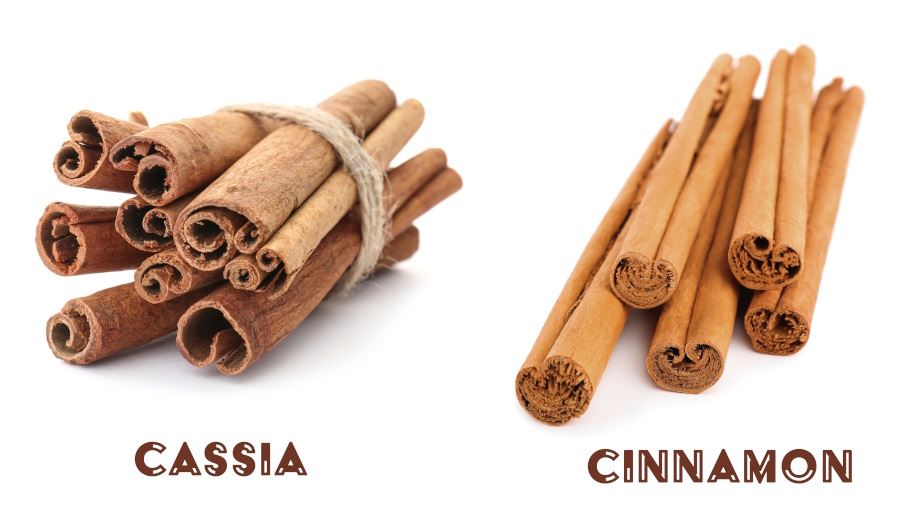
Cassia cinnamon is the one we mostly find in 90% of supermarkets. It is originally from southern China and Indonesia, has a dark brown colour, a thick and hard bark, and a very spicy and astringent flavour. It is more economical and easier to cultivate, making it the preferred option for the mass-market food industry, pastries, and general flavouring.
In contrast, Cinnamomum verum J. Presl, historically originating from Sri Lanka (formerly Ceylon) and southern India, presents entirely different characteristics. Its bark is thin, fragile, and rolls into multiple concentric layers, resembling a cigar. Its colour is a light cinnamon tone, and its organoleptic profile is much sweeter, more delicate, and complex. This is the variety that botany classifies as "true" cinnamon.
But the difference goes far beyond visual appearance or market price. The most critical distinction between both varieties lies in their phytochemical composition, and it is the determining factor in deciding which one to incorporate into our daily wellness routine.
Coumarin: the reason why supermarket cinnamon is not the best daily option
The component that marks the true border between both species is called coumarin. Coumarin is a natural organic compound, a phytochemical that plants develop as a defence mechanism and which provides that characteristic sweet wood smell.
The problem lies in the toxicology of this compound when consumed recurrently and in moderate or high amounts. Toxicological evidence warns that coumarin is hepatotoxic, meaning it can cause liver damage in sensitive individuals if certain recommended daily intake thresholds are exceeded4.
Cassia cinnamon (the supermarket one) contains exceedingly high levels of coumarin, potentially exceeding 2 to 5 milligrammes per gramme of powder. If a person decides to consume one or two teaspoons of this cinnamon daily on a regular basis to try to control their glucose levels, they will be subjecting their liver to unnecessary stress from toxin metabolisation.
This is where Cinnamomum verum J. Presl stands out as a notably better option. Ceylon cinnamon has coumarin levels that are barely detectable (usually between 0.004 and 0.04 milligrammes per gramme), making it toxicologically safe for continuous, daily consumption and in useful amounts for supplementation.
To obtain constant and safe results, the use of supplements made from a dry extract of Ceylon cinnamon bark sourced strictly from Cinnamomum verum J. Presl is the way to ensure that the adequate concentration of polyphenols is obtained without assuming the hepatic risks associated with the coumarin of the Cassia variant.
| Characteristic | Cassia Cinnamon (Common) | Ceylon Cinnamon |
|---|---|---|
| Main origin | Southern China and Indonesia. | Sri Lanka (formerly Ceylon) and southern India. |
| Bark appearance | Thick, hard, and formed by a single layer. | Thin, fragile, and rolled into multiple concentric layers. |
| Colour | Dark and intense brown. | Light and soft cinnamon tone. |
| Organoleptic profile | Very spicy and astringent flavour. | Sweet, delicate, and complex flavour. |
| Coumarin levels | Very high (2 to 5 mg/g). | Almost undetectable (0.004 to 0.04 mg/g). |
| Hepatic safety | Potential risk with high daily consumption. | Safe toxicological profile for continued use. |
| Main use | Sporadic flavouring and industrial pastries. | Metabolic support, supplementation, and daily use. |
Practical guide: how to incorporate Cinnamomum verum extract into your routine
When it comes to taking advantage of the properties of Ceylon cinnamon for maintaining normal blood glucose levels, consistency and the correct dosage are fundamental.
The problem with the powdered cinnamon format for continued use
The traditional way to consume it is in infusions or by sprinkling cinnamon powder on food (such as porridge, yoghurt, or coffee). However, the limitation of this method is variability. The active polyphenol content in a cinnamon stick or its ground powder varies enormously depending on the harvest, moisture level, storage, and drying method.
Alternative: cinnamon extract, which ensures the amount of active compounds
To avoid this variability, supplementation through standardised dry extracts in capsule format allows you to always obtain an exact dose of active principles. By consuming it as an extract, it ensures that the profile of flavonoids and modulating compounds remains intact.
When to take Ceylon cinnamon capsules?
The ideal time to take a supplement based on Cinnamomum verum is just before or during main meals, especially those containing a higher proportion of carbohydrates. Being present in the digestive tract at the same time as food, its compounds can act simultaneously in modulating digestive enzymes and interacting with nutrients.
The union between cinnamon extract and a healthy lifestyle
It is fundamental to emphasise that the use of any botanical extract must be accompanied by coherent lifestyle habits. Ceylon cinnamon is a support tool, not an isolated remedy. Maintaining a lifestyle that includes regular physical activity (since active muscle is the body's main consumer of glucose), a diet rich in fibre and vegetables, and a good night's rest, will synergistically boost the metabolic efficacy of cinnamon polyphenols.
Precautions and contraindications: who should not take Ceylon cinnamon?
Although the Cinnamomum verum J. Presl variety presents a very high safety profile thanks to its zero coumarin concentration, its use as a food supplement requires certain precautions.
As a general rule, cinnamon extract in high concentrations is not recommended for pregnant or breastfeeding women, due to the lack of conclusive studies on its safe use during these stages. Nor should it be consumed by children.
The most important point of attention falls on people diagnosed with type 1 or type 2 diabetes who are already under medical treatment with hypoglycaemic drugs or insulin therapy. Because cinnamon acts by supporting the maintenance of glucose levels, its combination with these medications could potentiate the blood sugar-lowering effect, increasing the risk of suffering from hypoglycaemia. If this is your case, or if you suffer from a diagnosed metabolic disease, it is absolutely essential to consult a healthcare professional or endocrinologist before introducing any botanical supplement into your daily routine.
Bibliography
- Cinnamon as a Complementary Therapeutic Approach for Dysglycemia and Dyslipidemia Control in Type 2 Diabetes Mellitus and Its Molecular Mechanism of Action: A Review¹. Silva, M. L., Bernardo, M. A., Singh, J., & de Mesquita, M. F. (2022). Nutrients, 14(13), 2773.
- Extracted from the EFSA health claims application list, under evaluation (ID 2013).
- The effects of cinnamon on patients with metabolic diseases: an umbrella review of meta-analyses of randomized controlled trials². Gou, H., et al. (2025). Frontiers in Nutrition.
- Coumarin-Induced Hepatotoxicity: A Narrative Review³. Pitaro, M., Croce, N., Gallo, V., Arienzo, A., Salvatore, G., & Antonini, G. (2022). PMC - National Institutes of Health.
About the author
Content researched and written by the Anastore editorial team.
Reviewed and verified against scientific literature by our Nutrition and Research Department.
Find out more about our editorial policy and scientific rigour.

This article is strictly for informational purposes and does not replace the advice of a healthcare professional.