
Properties of green anise for digestion: benefits and use
 Do you feel heavy after eating?
Do you notice that your digestion becomes sluggish in the mid-afternoon or stops completely when you alter your routine or travel?
Factors such as stress, irregular schedules, or heavy meals often alter the gastrointestinal tract. When this occurs, people frequently turn to plant-based alternatives to regain daily comfort.
Among the plant species studied, green anise (Pimpinella anisum) stands out notably. Far from being a simple culinary condiment, the extracts of this plant are prominent for their direct impact on the physiology of the stomach and intestines.
Let's look at the properties of green anise, why it should not be confused with other varieties such as star anise, and why consuming it in capsules rather than as an infusion is the most sensible choice.
Benefits of green anise for the stomach and intestinal transit
Green anise helps to promote the flow of digestive juices
The correct secretion of gastric juices is the foundation of efficient digestion. The stomach needs an optimal level of acid and enzymes to break down complex foods (especially proteins) before sending them to the intestine.
It has been observed that the phytochemicals present in green anise act by gently stimulating the secretory glands of the gastric mucosa. This process prepares the stomach environment to process food without the need to force emptying times.
-
By maintaining an adequate flow of digestive fluids, the stomach does its job within the stipulated time, which helps to considerably reduce the feeling of heaviness or having a "brick in the stomach" after a heavy meal1.
Green anise contributes to the normal functioning of the intestinal tract2
The tissue lining our intestines is composed of smooth muscle. This muscle contracts and relaxes rhythmically (peristalsis) to move the food bolus and waste forward. Occasionally, the build-up of gas or stress causes these contractions to become erratic, generating irregular spasms and retention.
Research highlights the ability of Pimpinella anisum extracts to relax intestinal tissue. Its active compounds interact with the smooth muscle receptors of the intestine, helping to modulate contractions. Rather than irritating the bowel, green anise promotes a regular rhythm, mitigating the irregular contractions that cause discomfort and facilitating smooth intestinal transit.
Recent studies support the use of its essential oils, often in synergy with other plants, to modulate both gastric and intestinal motility disorders3.
Green anise offers comprehensive support for heavy digestions
As a result of its combined actions (the modulation of gastric juices in the upper abdomen and the regulation of motility in the lower tract), green anise offers overall support.
It facilitates the mechanical transition of food without the slowdowns that often translate into flatulence, bloating, and generalised discomfort.
Differences between green anise and star anise: which is better for digestion?
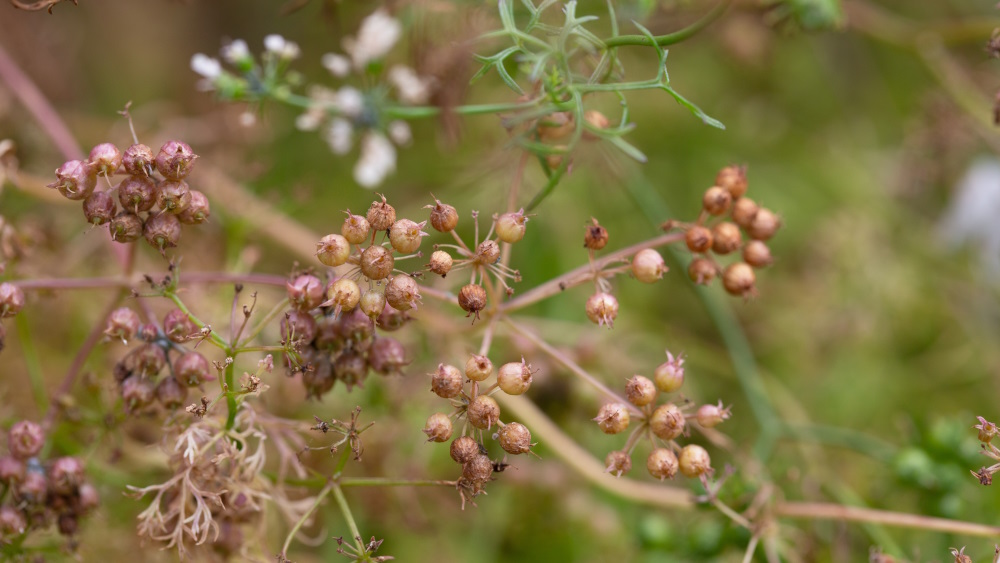
A very common mistake when looking for digestion supplements is to confuse green anise with star anise. Although they share part of their name and a similar aromatic profile, botanically they are completely different species with distinct origins, phytochemical profiles, and safety levels.
Understanding the difference between green anise and star anise is essential for choosing the right digestive support.
-
Green anise
It is a plant of the Apiaceae family (a cousin of fennel and cumin), traditionally cultivated in Europe and the Mediterranean basin. Its seed is small, striated, and oval.
-
Star anise
It belongs to the Schisandraceae family, is native to Asia, and its fruit has a characteristic woody star shape.
Both plants contain anethole, the phenolic ether responsible for their characteristic smell and much of their action on the gastric mucosa. However, at Anastore, when selecting the most suitable ingredient to create a product that promotes digestive comfort, we strictly opt for green anise. This formulation decision is based on three technical reasons:
- Complementary phytochemical profile: in addition to anethole, green anise contains a specific matrix of flavonoids, chlorogenic acid, and caffeic acid derivatives that enhance its antioxidant and antibacterial action in the gut microbiome in a highly balanced way4.
- Safety and risk of adulteration: Chinese star anise (Illicium verum) is often confused visually and in import channels with Japanese star anise (Illicium anisatum), which is highly toxic and rich in neurotoxins (anisatins). The use of European green anise avoids this risk of adulteration, guaranteeing a very high safety profile for daily consumption.
- Physiological focus: historically and in current scientific literature, validation regarding the flow of digestive juices and normal intestinal tract function in the European context has focused on standardised extracts of Pimpinella anisum.
Comparative table: Green anise vs. Star anise
| Characteristic | Green anise (Pimpinella anisum) | Star anise (Illicium verum) |
|---|---|---|
| Botanical family | Apiaceae (Umbelliferae) | Schisandraceae |
| Main origin | Mediterranean basin and Europe | Southwest China and Vietnam |
| Fruit appearance | Small, oval, and striated seed | Woody star-shaped fruit (8 points) |
| Safety of use | Very high (almost zero risk of adulteration) | Potential risk of confusion with toxic Japanese variant |
| Use in supplements | Very common for gastrointestinal well-being | More common in culinary or traditional Asian use |
Green anise in capsules or infusion: which format is more effective?
For decades, the most common way to consume digestive plants has been through hot water infusions. However, with advances in food technology and nutrition, the use of dry extracts presented in capsules has gained enormous prominence, displacing the infusion in terms of efficacy and reliability.
-
If you are looking for constant and invaluable support for your digestion, green anise in capsules presents technical and physiological advantages over the classic post-meal infusion.
1. Standardisation and concentration of active compounds
When you prepare an infusion, the amount of active compound that passes from the seed to the water is random. It depends on the water temperature, the steeping time, the freshness of the plant, and the grind size. Furthermore, the main active compound of green anise (anethole) is a highly volatile essential oil. Upon pouring boiling water, a large part of this compound responsible for the digestive action evaporates into the air (this is what you smell).
On the contrary, food supplements in capsules containing green anise use standardised dry extracts. This means that laboratories extract the useful compounds from the plant using cold processes or under controlled conditions, ensuring that each capsule provides a standardised and stable dose of the active compound, avoiding losses through evaporation.
2. Gastric protection and bioavailability
The water from an infusion is rapidly absorbed in the upper sections of the stomach. A quality vegetable capsule acts as a transport vehicle, protecting the concentrated green anise extract during the initial impacts of gastric acids, allowing it to be released in a sustained manner along the stomach and intestinal mucosa, right where the motility receptors need its support.
3. Convenience and lack of taste
The taste of anethole is intense, sweet, and aniseed-like (similar to black liquorice). Many people do not tolerate this persistent flavour on the palate, which reduces adherence to drinking infusions.
Capsules offer a completely tasteless, odourless, and easy-to-carry alternative. Whether on a business trip, in a restaurant after a heavy meal, or in the office, encapsulated supplementation provides a practical and readily available alternative that a hot infusion cannot match.
Side effects and contraindications of green anise
Although Pimpinella anisum extract is safe and well-tolerated by the vast majority of people in the standardised doses found in food supplements, certain fundamental precautions should be observed.
People diagnosed with cross-allergies to other plants in the Apiaceae family (such as fennel, coriander, celery, or carrot) should refrain from consuming it to avoid allergic reactions.
Given that some phytochemicals in green anise have a structure that can exert mild phytoestrogenic effects, its prolonged use is not advised in patients with a clinical history of oestrogen-dependent pathologies without prior medical supervision. Finally, and as a universal precautionary measure in phytotherapy, its consumption in high concentrations is contraindicated during pregnancy, the breastfeeding period, and in minors—populations for whom a healthcare professional should always be consulted before starting any supplementation.
Bibliography
- Efficacy and safety of aniseed powder for treating gastrointestinal symptoms of COVID-19: a randomized, placebo-controlled trial. Mosaffa-Jahromi, M., Molavi Vardanjani, H., Fuzimoto, A., Hunter, J., Lankarani, K. B., & Pasalar, M. (2024). Frontiers in Pharmacology, 15, 1331177.
- Extracted from the EFSA health claims application list, under evaluation (ID 3951).
- Herbal Extracts Mixed with Essential Oils: A Network Approach for Gastric and Intestinal Motility Disorders. Budriesi, R., Corazza, I., Roncioni, S., Scanferlato, R., De Luca, D., Marzetti, C., Gotti, R., Rizzardi, N., Bergamini, C., Micucci, M., Roncarati, D., & Mattioli, L. B. (2024). Nutrients, 16(24), 4357.
- Pimpinella anisum L. Essential Oil a Valuable Antibacterial and Antifungal Alternative. Dumitrescu, E., Muselin, F., Tîrziu, E., Folescu, M., Dumitrescu, C. S., Orboi, D. M., & Cristina, R. T. (2023). Plants, 12(13), 2428.
About the author
Content researched and written by the Anastore editorial team.
Reviewed and verified against scientific literature by our Nutrition and Research Department.
Find out more about our editorial policy and scientific rigour.

This article is strictly for informational purposes and does not replace the advice of a healthcare professional.