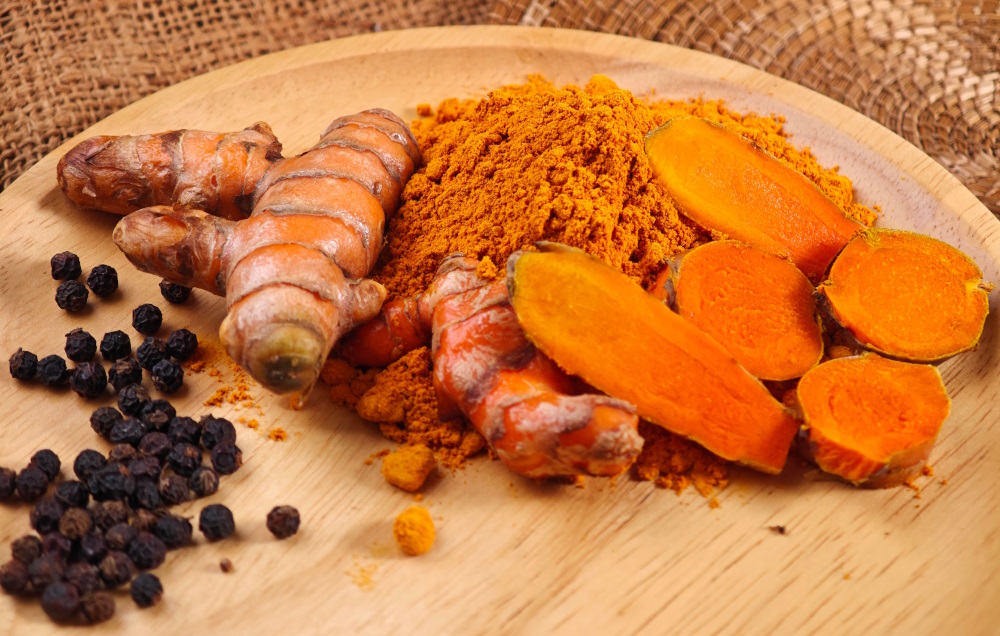
Why Anastore's turmeric capsule food supplement has high bioavailability without the drawback of pepper
Does your turmeric supplement irritate your stomach or leave you feeling heavy after taking it?
Perhaps you started taking it for joint support1 or for its antioxidant properties2, but it has ended up becoming a real digestive challenge. For many people, incorporating this botanical into their daily routine is a headache, or rather, a stomach ache.
But there is something you probably didn't know: often, the culprit behind this discomfort is not the turmeric root itself, but the "extra" ingredient that almost all manufacturers add to the blend to force your body to absorb it.
-
At Anastore, instead of using tricks that can be harsh on your digestive system, we use a patented extract in our formula called Curcugreen® / BCM-95®3.
With it, we achieve optimal and prolonged assimilation, whilst respecting your stomach at all times. Let's see why our body is so resistant to absorbing this plant and how next-generation formulas have naturally tackled the problem.
The bioavailability problem: Why our body rejects and eliminates natural curcumin
To understand why it is so difficult to formulate a turmeric food supplement, we first need to look at how this plant behaves inside you.
What curcumin is and why it struggles to cross the intestine
The secret of turmeric (Curcuma longa) lies in compounds called curcuminoids, with "curcumin" being the most important of all. The major issue with curcumin is that it is a "lipophilic" molecule. Put simply: it loves fat, but hates water.
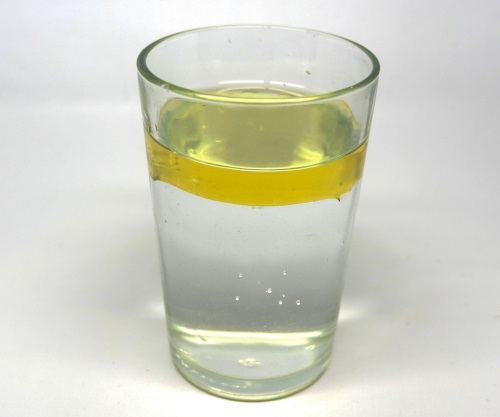
Imagine trying to mix a spoonful of oil into a glass of water. No matter how much you stir, the oil will eventually float and separate. Well, our stomach, our intestines, and our blood are environments where water predominates. When you take standard turmeric, the curcumin clumps together, does not dissolve well, and your intestine has to work extremely hard to let it pass through its walls.
How the liver also acts as a barrier to curcumin
But the real obstacle course doesn't end there. If a small amount of that curcumin finally manages to cross your intestinal barrier, it will come face-to-face with your body's strictest guardian: the liver.
The liver acts as your body's security filter. When it detects curcumin travelling through your blood, it does not recognise it as a nutrient, but as a foreign substance. Immediately, the liver enzymes (the "workers" of this filter) pounce on it, attach a sort of chemical tag to make it water-soluble, and send it straight to the kidneys to be expelled in your urine.
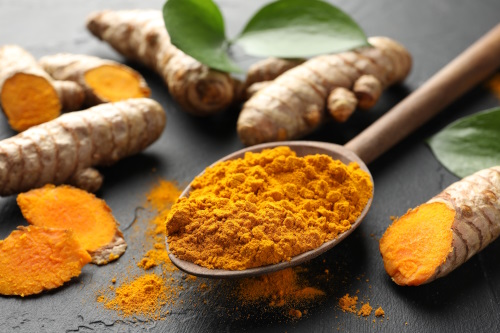
All of this happens very quickly. That is why, if you simply take a few spoonfuls of the spice powder you have in your kitchen, the actual amount of curcumin that ends up circulating in your bloodstream to reach your joints or tissues is practically zero. This is what we mean when we say a product has "low bioavailability".
The industry's standard solution: The use of black pepper and its risk of digestive irritation
Decades ago, the food supplement industry became aware of this problem. If the liver eliminates curcumin so quickly, how do we make it stay in the body? The answer they found, and which to this day remains the most common one you'll find on the market if you search to buy a turmeric supplement, was to add black pepper, specifically an extract called piperine.
How the pepper trick works on your liver
Black pepper does not make curcumin dissolve better, nor does it make it travel faster. What piperine does is, quite literally, distract and block the guardian.
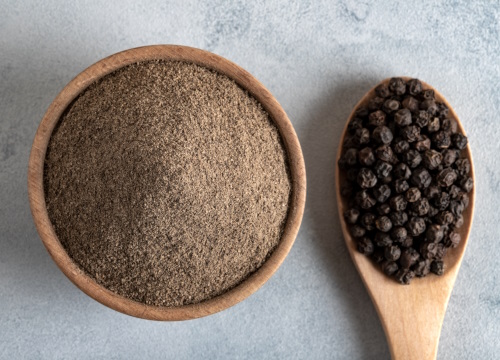
When ingested, this pepper temporarily blocks your liver enzymes responsible for cleansing the blood. Because the liver's "workers" are paralysed, the curcumin is not eliminated and is forced to keep circulating in your bloodstream. On paper, this increases absorption and causes blood tests to show high levels, but at what physiological cost?
Acidity, gastric discomfort, and the problem of blocking the liver
Taking turmeric in capsules mixed with pepper every day carries two serious problems that many people are unaware of:
Your stomach may suffer
Piperine is a strong, spicy, and caustic compound. If you have even a mildly sensitive stomach, or if you take your supplement in the morning, this concentrated pepper can irritate your stomach lining. It is the reason why many people experience heartburn, acid reflux, or immense heaviness after taking their supplement.
The blockage is not selective
The same liver enzymes that the pepper paralyses to retain the curcumin are the ones your body uses to filter out natural waste substances or process medications. If you switch off your body's filtration system, you can alter the way you assimilate other things. Therefore, it is not the gentlest or safest solution for daily use.
The Curcugreen® innovation: A high-absorption turmeric without irritating your digestion
When we at Anastore set out to create a turmeric supplement of the highest quality, we knew we didn't want to use tricks that would block your body's natural defences. We did not want pepper. We knew the answer had to lie in the plant's own nature.
And so it does. When the industry extracts curcumin from the plant's rhizome to make capsules, it usually throws away the rest of the components, including some wonderful essential oils found inside the fresh root. Among these, one stands out: ar-turmerone.
-
What we achieve by using the Curcugreen® patent (also known as BCM-95®) in our turmeric food supplement is the reconstruction of the original plant. The purest curcumin is taken and reunited with its own essential oils (the turmerones).
Turmeric oils facilitate absorption by acting as a VIP pass
As we mentioned earlier, curcumin loves fat. By surrounding it with its own natural essential oils, we create a perfect vehicle.
The membranes of all the cells in your body, including those in your intestine, are made of lipids (fats). When curcumin reaches your intestine accompanied by these oils, your cells recognise it immediately. Instead of crashing into a wall of water, it slides easily inside you, being absorbed through your lymphatic system.
Turmeric supplement without the drawbacks of black pepper
When taking turmeric capsules formulated without black pepper, digestive tolerance is far better. Without the heartburn or stomach heaviness that the use of this ingredient brings.
Comparison of formats for taking turmeric
To make it even clearer, look at what happens inside your body depending on the type of turmeric food supplement format you choose:
| What you take | How much reaches your cells? | How does your stomach feel? |
|---|---|---|
| Kitchen powder | Hardly anything. Its elimination is very rapid. | Fine, but you would have to eat whole spoonfuls to notice anything. |
| Standard capsules + Black pepper | High, but by blocking your liver enzymes. | Average. If you have any sensitivity, you may feel burning, acidity, or heaviness. |
| Our formula (Curcugreen® with its own oils) | Very high. It enters naturally, without blockages. | High digestive tolerance, caring for your gastric mucosa. |
Turmeric side effects and contraindications
Although turmeric capsules formulated without pepper are very gentle on your stomach, it is always important to talk about safety when consuming concentrated plant extracts. At the recommended doses, it is a very safe product. However, not everyone should take it.
Who should avoid this supplement?
- People with biliary problems: Turmeric naturally stimulates the gallbladder to produce bile. If you have gallstones or obstructed bile ducts, you must not take it.
- Use of anticoagulant medications: Curcumin makes the blood slightly more fluid. If you take medication such as Sintrom or daily aspirin, it is essential that you consult your doctor before taking this supplement.
- As a standard precaution with concentrated supplements, it is not recommended during pregnancy or breastfeeding.
Bibliography
- The efficacy of curcumin in relieving osteoarthritis: A meta-analysis of meta-analyses. Bideshki, M. V., Jourabchi-Ghadim, N., Radkhah, N., Behzadi, M., Asemani, S., Jamilian, P., & Zarezadeh, M. (2024). Phytotherapy Research, 38(6), 2875-2891.
- Extracted from the EFSA health claims application list, under evaluation (ID 4007).
- BCM-95® (CURCUGREEN®).
About the author
Content researched and written by the Anastore editorial team.
Reviewed and verified against scientific literature by our Nutrition and Research Department.
Find out more about our editorial policy and scientific rigour.

This article is strictly for informational purposes and does not replace the advice of a healthcare professional.