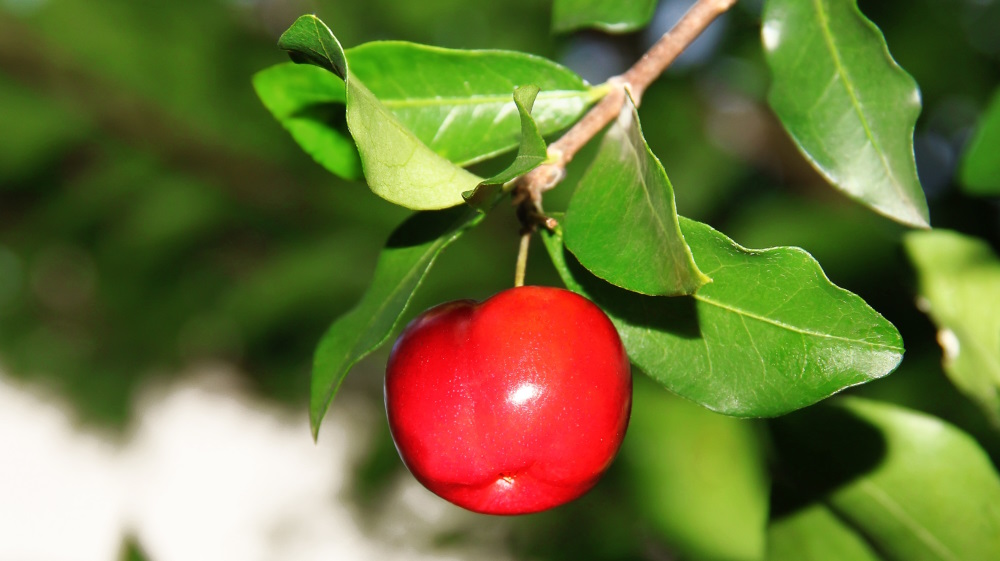
Acerola and vitamin C: How to support your natural defences in winter
The change of season, and especially that transition where the days shorten and we head into autumn and winter, represents a real challenge of adaptation for our bodies. Falling temperatures, less exposure to sunlight, and the fact that we spend much more time in enclosed (and often poorly ventilated) spaces create the perfect scenario to put our natural defences to the test.

In times of physical stress, fatigue, or sudden drops in temperature, the white blood cells of our immune system can concentrate up to 100 times more vitamin C inside them than what circulates freely in our blood. They act like small batteries: they absorb all the vitamin C they can to have enough energy when it is time to protect the organism.
It must be taken into account that not all sources of this vitamin interact with our stomachs in the same way or are absorbed equally. Acerola, a small, bright red fruit that resembles a cherry, stands out for offering this vitamin in a very particular form. While it is already highly valued for its ability to help prevent fatigue and daily tiredness, it is also worth knowing how it supports your defences during the cold months.
The immune system vs the cold: what happens to the body?
Our immune system is not a switch that is simply turned on or off; it is a highly complex and dynamic network that works 24 hours a day and requires continuous maintenance.
The first physical barrier: skin and mucous membranes
During the winter, we are not only affected by the outside cold, but by the contrasts. We move from office or home heating, which dries out the environment, to the biting cold of the street. This thermal shock and the lack of humidity dry out our mucous membranes (the internal "skin" that lines our airways).
This dryness causes small invisible cracks and makes the natural mucus, which acts as a net to catch dust and external agents, lose its effectiveness. In this way, our first physical barrier of protection is weakened. Furthermore, by wearing much more clothing and having fewer daylight hours, our vitamin D levels often drop, which also slightly confuses our defences.
Before our body has to "fight" on the inside, it tries to stop everything on the outside. Vitamin C contributes to normal collagen formation for the proper functioning of the skin and mucous membranes. This collagen is like the cement that holds the bricks of our skin and mucous membranes together, helping that first containment barrier to remain strong and intact against the cold.
Properties of vitamin C for the functioning of defences
-
Vitamin C contributes to the normal function of the immune system4.
It is very common to hear that acerola and its vitamin C are good for defences, but how does this translate into your day-to-day life?
We can imagine the work of this nutrient within us as a support team acting on three different levels:
1. Fuel for the "patrollers"
When an external agent manages to slip through the nose or throat, the first cells to raise the alarm are a type of white blood cell that we can imagine as "patrollers". Their job is to move quickly to the site of the problem and neutralise the unwanted visitors.
To be able to move at high speed, as if following a trail of breadcrumbs through the tissues, and to have the energy necessary to carry out the "clean-up", these patrollers consume enormous amounts of vitamin C1. Therefore, in times of exhaustion, levels of this vitamin plummet in our bodies. If we consume foods rich in it through our diet, we ensure that these patrollers do not run out of fuel halfway through their shift.
2. Protective shield against oxidative stress
When our defence cells do their cleaning work, they generate waste substances that, if they accumulate, can oxidise and damage the body's own healthy cells. It is a process very similar to what happens when a piece of iron rusts when left out in the open.
This is where vitamin C puts on its "antioxidant" suit. What it does is neutralise those waste products, acting as a protective shield. In this way, it helps protect cells against oxidative damage and encourages our white blood cells to work in better conditions.
3. Support for immune memory
Finally, our immune system has a highly specialised department: memory cells. These are the ones that remember how the body reacted in the past to certain challenges, so they can act faster next time. Various research studies have observed that vitamin C is also present in the maturation process of these cells, helping the body's response to be coordinated, proportionate, and without overreaction2.
Natural vs synthetic vitamin C: The phytochemical benefits of acerola
If vitamin C is so important, it is logical to wonder if it matters where it comes from. The short answer is no. This is where the difference between a nutrient isolated in a laboratory and a complete natural food comes into play.
The classic vitamin C we can buy in many shops is pure, synthetic ascorbic acid. It works, yes, but it travels alone. However, in nature, nutrients are rarely found in isolation.
-
Acerola is one of the fruits with the highest concentration of vitamin C in the world, but the most interesting thing is not the quantity, but the "company".
Greater protection and digestive assimilation

In the pulp of this fruit, vitamin C is surrounded by other natural plant compounds such as bioflavonoids and pectins3. We could say that these compounds are the vitamin's "bodyguards".
These flavonoids protect the vitamin C as it passes through our digestive process, helping to prevent its early oxidation. Furthermore, they make the body recognise it as real food, facilitating a much gentler and more progressive assimilation.
For this reason, when looking to supplement the diet, many people prefer ingredients that respect this natural balance. Opting for supplements based on concentrated berry juice, which provide natural vitamin C extracted directly from acerola, allows the organism to take advantage not only of the vitamin but of that entire plant-based work team that accompanies it. This is particularly comfortable for the stomach, as the fruit's natural matrix buffers the acidity typical of isolated vitamins.
Comparative table: Synthetic Vitamin C vs Acerola
| What sets them apart? | Synthetic vitamin C | Acerola citamin C |
|---|---|---|
| Where does it come from? | Produced and isolated in a laboratory | Directly from the fruit (Malpighia emarginata) |
| What accompanies it? | Travels completely alone | Accompanied by natural bioflavonoids and polyphenols |
| Digestion and stomach | Can be more acidic and heavy | Gentle and well-tolerated thanks to the fruit's plant environment |
| Assimilation | Rapid, excess is quickly eliminated | More progressive due to the fruit's "accompanying effect" |

Healthy habits to maintain well-being in the cold months
Strengthening the immune system in the cold months will never depend on a single magic ingredient. Consuming acerola in autumn and winter makes a lot of sense, but always as support within a lifestyle that cares for the body as a whole. For your defences to work well, they need a good environment:
Constant hydration
In winter, we don't sweat as much nor do we feel that oppressive heat, so we often forget to drink water. A big mistake. As we mentioned at the beginning, your mucous membranes need to be moist to act as a barrier. Drinking warm herbal teas, broths, and water is vital for the throat's defences to function properly.
Consistency over binges
Vitamin C is water-soluble. This means our bodies do not know how to store it long-term in large quantities (unlike fat, for example). If there is an excess, we eliminate it when we go to the bathroom. Therefore, it is much smarter and more useful to provide small amounts consistently every day than to take enormous and exaggerated doses once in a while.
Restorative rest
The immune system is like a building's overnight maintenance crew. It is during the phases of deep sleep when the body repairs tissues and organises its defence cells. Without quality rest, stress levels skyrocket and defences become confused.
Acerola: Side effects and contraindications
Acerola, being a fruit, is a food whose consumption is very safe for the vast majority of the population. Furthermore, as the body naturally eliminates excess vitamin C through urine, the chances of accumulation in the body are very rare, as it is a water-soluble vitamin. Nonetheless, if excessively high amounts are taken, the body warns us by speeding up intestinal transit, which can cause mild digestive discomfort or a transient episode of diarrhoea that disappears upon adjusting the amount.
It should be borne in mind that vitamin C helps to very efficiently absorb iron from plant-based foods, which is great for most, but can be counterproductive for those who already have an excess of this mineral. Similarly, people with a tendency to form oxalate kidney stones should consult their doctor before consuming concentrated supplements, as part of the vitamin C is metabolised in this way.
Preparing for winter from within
Caring for our defences is not about stimulating the body artificially or forcing it to work beyond its capabilities. Rather, it is about making things easier for it. Understanding that cold, temperature changes, and daily wear and tear deplete our reserves allows us to make smarter decisions in our daily lives. Choosing options that respect our nature, such as the rich matrix of plant compounds offered by acerola, is a way of accompanying our biology. In the end, supporting your body simply means giving it good fuel so that it can normally do what it has been perfecting for thousands of years: protecting you and keeping you in balance.
Bibliography
- Vitamin C and Immune Function. Carr, A. C., & Maggini, S. (2017). Nutrients, 9(11), 1211.
- Effects of Citrus Fruit Juices and Their Bioactive Components on Inflammation and Immunity: A Narrative Review. Miles, E. A., & Calder, P. C. (2021). Frontiers in Immunology, 12, 712608.
- Acerola, an untapped functional superfruit: a review on latest frontiers. Prakash, A., & Baskaran, R. (2018). Journal of Food Science and Technology, 55(9), 3373-3384.
- COMMISSION REGULATION (EU) No 432/2012 of 16 May 2012 establishing a list of permitted health claims made on foods, other than those referring to the reduction of disease risk and to children's development and health.
About the author
Content researched and written by the Anastore editorial team.
Reviewed and verified against scientific literature by our Nutrition and Research Department.
Find out more about our editorial policy and scientific rigour.

This article is strictly for informational purposes and does not replace the advice of a healthcare professional.