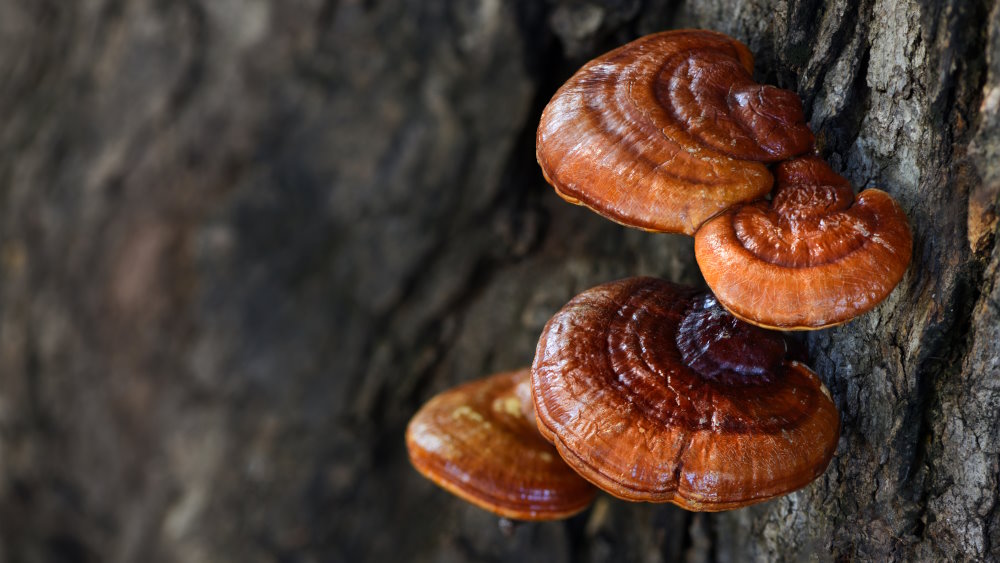
Reishi Mushroom (Ganoderma lucidum): the "coach" for your defences and your cholesterol
What if...?
If you could hire a personal trainer to get your immune system into shape and a manager to regulate your cholesterol, would you do it?
The fungi kingdom is, without a doubt, one of the most fascinating and complex in nature. For centuries, humans have searched forests for all kinds of resources for their food and wellbeing. However, there is a particular specimen that, at first glance, does not exactly invite you to eat it. We are talking about Ganoderma lucidum, popularly known worldwide as the Reishi mushroom.
If you ever come across a Reishi at the base of a tree, the first thing you will notice is that it looks nothing like a button mushroom or a king oyster mushroom. It is kidney-shaped, has a hard texture reminiscent of wood or cork, and a shiny, dark red surface, as if someone had carefully varnished it.
-
Its appearance is so robust and its taste so intensely bitter that it is impossible to use it in a traditional cooking recipe. It cannot be sautéed or added as it is to a soup.
So, why has this mushroom, which looks like a piece of bitter wood, captured the attention of modern nutrition?
The answer does not lie in its culinary value, but in its extraordinary phytochemical profile. Reishi is not a food that nourishes us with calories, but a complex matrix of bioactive compounds that act as true physiological modulators.
Let us break down exactly what happens in our body when we consume the extracts of this mushroom, acting as a peculiar "personal trainer" for our daily wellbeing.
Properties and active ingredients of Reishi: meet its molecular "workers"
To understand how Ganoderma lucidum works, we must look through a microscope and analyse its biochemical composition.
Let us imagine the mushroom is a large factory; inside it, there are hundreds of different compounds, but there are two highly specialised "departments" that take all the spotlight: polysaccharides and triterpenes.
Beta-glucans and polysaccharides (the cellular coaches)
In the world of nutrition, a polysaccharide is a long and complex chain of sugar molecules (carbohydrates).
However, those found in Reishi, specifically known as beta-glucans, have a very particular three-dimensional architecture. Due to this special shape, our digestive enzymes cannot easily break them down. They pass through the stomach and reach our intestines almost intact. That is where they perform their function, not by providing energy, but by interacting with the cells of our intestinal mucosa. They are responsible for most of the mushroom's interaction with our cellular surveillance system.
Triterpenes (ganoderic acids): The bitterness with a regulatory function
If beta-glucans are the coaches, triterpenes are the metabolic regulators. They are molecules of a lipid nature (having an affinity for fats) and are the direct culprits of that intensely bitter taste that characterises Reishi.
Dozens of exclusive triterpenes called "ganoderic acids" have been identified in Ganoderma lucidum. Their chemical structure is similar to that of certain human hormones and cellular components, allowing them to intervene in processes related to fat metabolism in the liver and the bloodstream.
In addition to these two large groups, the mushroom's matrix provides other noteworthy elements, such as plant sterols, nucleotides, and minerals like zinc and selenium.
But how does all this chemistry translate into real effects for the body?
Benefits of Reishi for the immune system: A "gym" for your defences
The immune system is not a static shield, but rather a dynamic army of cells, tissues, and chemical signals that needs to be in constant balance. Maintaining this balance is what is known in biology as "homeostasis".
About the immune system
If it is too inactive, we are vulnerable to external agents. If it is overstimulated, it can turn against us.
The scientific literature surrounding nutritional mycology has intensely studied how certain foods and supplements can support this homeostasis. To understand how reishi might support our immune system, we can use the metaphor of a gym.
Let us imagine that our front-line immune cells, such as macrophages, in charge of "eating" cellular debris, and NK (Natural Killer) cells, specialised in detecting anomalies, are athletes that are sometimes resting in the lymphatic tissue of our intestines.
When we ingest the beta-glucans from Reishi, these complex molecules travel down the digestive tract. In the wall of our intestines, there are special receptors (like the Dectin-1 receptor) that act as "antennae". When a beta-glucan touches one of these antennae, it sends a "wake-up" signal to local immune cells.
-
Reishi contributes to natural immunological defences1
It is important to note that beta-glucan does not act as a dangerous invading agent that provokes an emergency inflammatory reaction. Rather, it acts like a good coach in the gym: it provides a tactical stimulus. It binds to cellular receptors and "trains" macrophages and NK cells to be more alert and improve their response capacity2. It does not make them hyperactive, but optimises their basal state of vigilance.
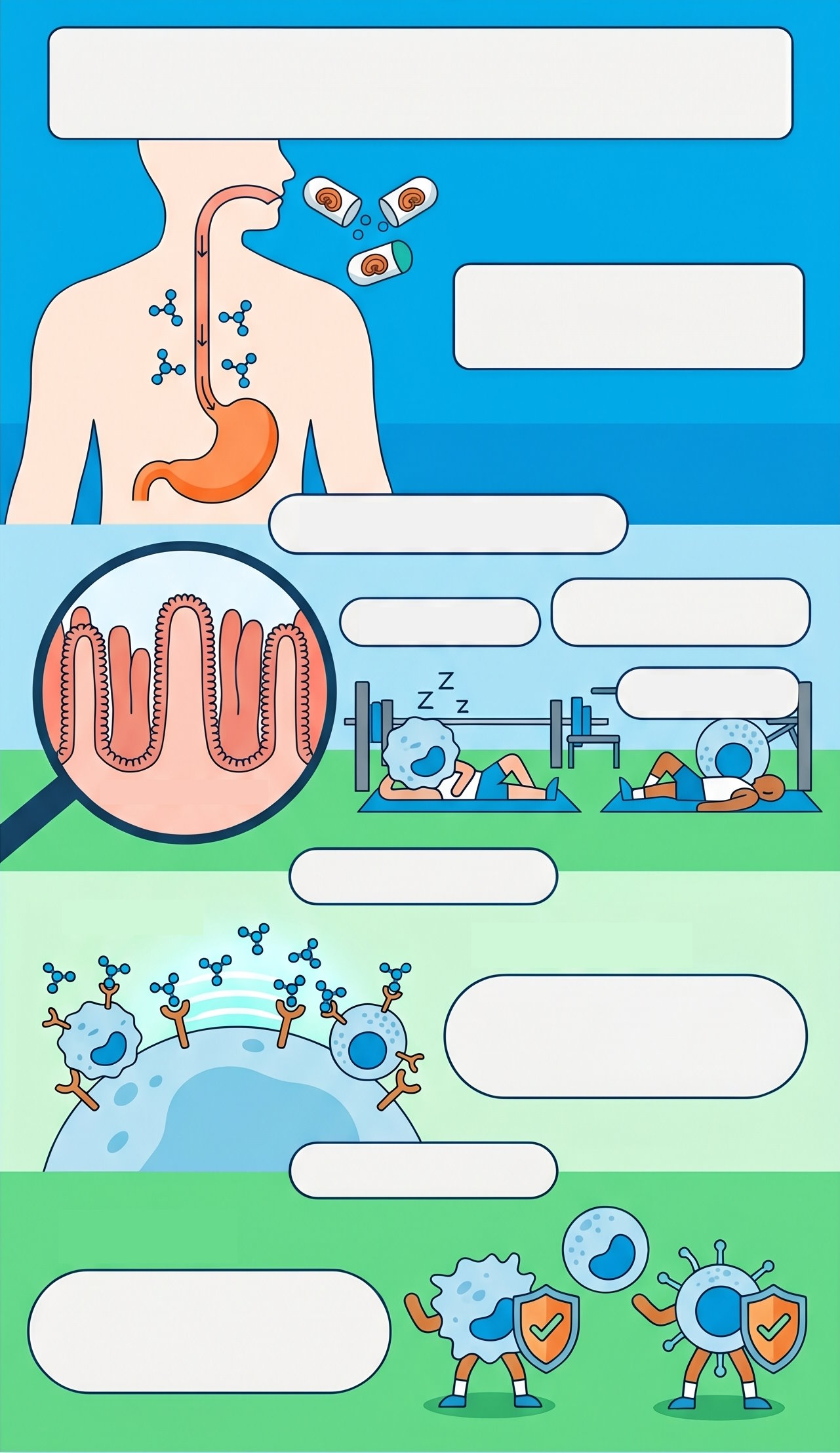 The training for your defences Intake of beta-glucans (reishi) Intestine (Zoom) Macrophages Immune cells NK (resting) Interaction Beta-glucans send an alert signal Vigilance Cells ready to protect you
This is the fundamental principle of nutritional immunomodulation: helping the body to maintain its own defences in optimal shape through natural compounds.
Reishi and cholesterol regulation: Operation "fat management"
The second major field of research surrounding Ganoderma lucidum focuses on our body's great chemical laboratory: the liver.
We live in a society where sedentary lifestyles and suboptimal dietary patterns have made the management of blood lipids an absolute priority.
-
Reishi helps to lower cholesterol levels3
Keeping LDL cholesterol and triglyceride levels under control is vital for cardiovascular health. Interestingly, science has observed that the consumption of this mushroom's bioactive compounds has an interesting interaction with our lipid metabolism.
How do compounds extracted from a mushroom manage to intervene in the amount of cholesterol circulating through our arteries?
This is where our second protagonists come into play: triterpenes (ganoderic acids) and plant sterols.
We can visualise this process as the management of a large cholesterol factory (the liver). The liver manufactures its own endogenous cholesterol using a key enzyme called HMG-CoA reductase. The triterpenes in Reishi act as "traffic managers" within this factory. Studies suggest that these compounds have the ability to slightly inhibit the activity of this enzyme4. By slowing down the enzyme, the liver receives the instruction to produce less cholesterol itself.
But the job does not end there. On the other hand, we have the mushroom's plant sterols. When we consume them and they reach the intestine, they meet the cholesterol that comes from our diet. Since sterols and cholesterol have a very similar molecular shape, they compete for the same "taxis" (micelles) to be absorbed and pass into the blood. By occupying the space in the taxis, sterols ensure that a part of the dietary cholesterol is left out and ends up being expelled through the faeces.
This double action, slowing down production slightly in the liver's factory and hindering absorption at the intestine's customs, is what physiologically justifies its ability to aid in lipid management. Of course, like any nutritional approach, this "coach" needs our collaboration: its effects accompany, but do not replace, a diet based on fresh plant foods and regular exercise.
How to take reishi: why can't you just eat it?
At this point, it might seem logical to think that the best way to take advantage of these properties is to go into the forest, look for a Reishi, grind it up, and add it to a smoothie. However, biology has prepared a botanical trap for us called "bioavailability".
Bioavailability is the amount of a nutrient or bioactive compound that actually manages to cross our digestive barriers and reach the cells where it is needed.
-
The problem with raw reishi is that its bioavailability is extremely low
Why does raw reishi have low bioavailability?
Mushroom cells are protected by cell walls made of a very resistant material called chitin. It is the same structural polymer that forms the exoskeleton of insects or crustaceans.
The digestive system of modern humans lacks the necessary enzymes (chitinases) in the quantity and power required to break down these hard walls. If you take the raw powder of the mushroom, the vast majority of the precious beta-glucans and triterpenes will remain locked in their chitin safe and pass right through your intestine.
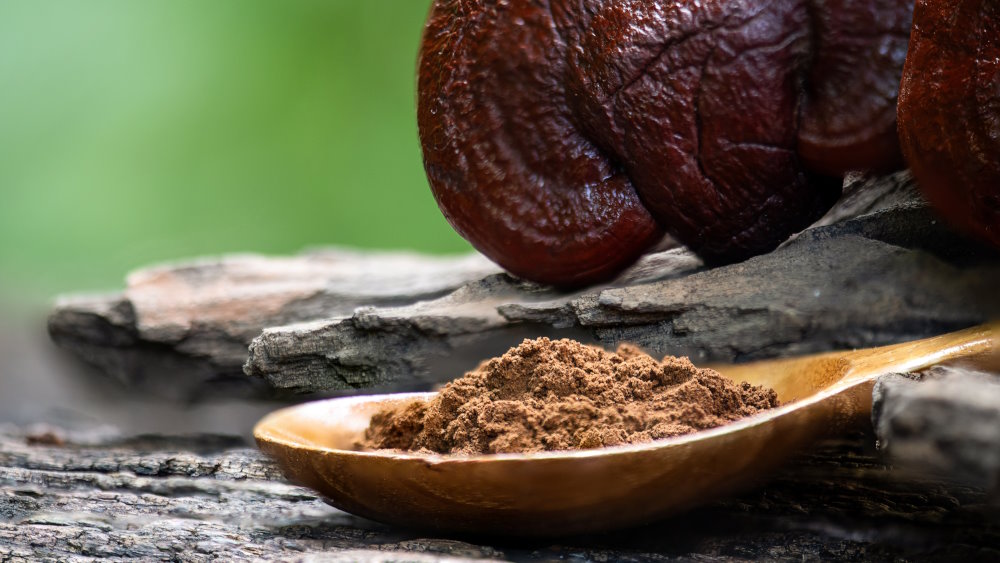
Organic Reishi extract: the key to true assimilation
For this reason, food technology has developed extraction processes. Through controlled techniques using hot water and hydroalcoholic mediums, it is possible to break this chitin matrix and release the active ingredients. By subsequently evaporating the liquid, we obtain a concentrated powder where the "workers" are already free and ready to be absorbed.
In addition, there is a crucial factor when evaluating these extracts: cultivation. Mushrooms are bioremediating organisms; they act like true sponges. They absorb everything in the substrate where they grow. If they grow in a polluted environment, they will absorb heavy metals and toxins.
Therefore, if we seek to benefit from their pure properties, the ideal approach is to resort to rigorous and clean formulations. Knowing and analysing the ingredients of an organic red reishi, standardised to guarantee a high percentage of polysaccharides and free of agrotoxins, ensures that we are delivering a pure and safe concentrate of its best functional components to our body, thus maximising its true assimilation.
Contraindications and side effects of reishi. Who should not take it?
Reishi is a functional food with real biological activity, so it demands responsible use. It is generally very safe and well-tolerated, although some people may experience transient and mild side effects such as initial gastrointestinal discomfort, slight dry mouth, or occasional dizziness, due to the body's adaptation to the load of complex polysaccharides.
Due to its ability to interact with coagulation, blood pressure, and the immune system, the consumption of Ganoderma lucidum is contraindicated (unless under strict medical supervision) in people taking anticoagulant or antiplatelet medication, patients undergoing treatment with immunosuppressive drugs, and people on medication regimens for hypotension. Out of precaution given the lack of conclusive studies, pregnant women, breastfeeding mothers, and minors should not consume it either.
Reishi extract as an allied supplement, not a magic solution
By recognising that reishi's beta-glucans could work as training stimuli for our innate immunity and that its ganoderic acids participate in the complex mechanism of cholesterol management, we can integrate this mushroom into our daily lives with realistic expectations.
Reishi is not a miracle cure that will solve health problems derived from bad habits. It is, returning to our metaphor, an excellent coach. But as with any good coach, true results only appear when we also do our part, taking care of our diet, keeping stress at bay, and giving our body the rest and movement it needs.
Bibliography
- Extracted from the EFSA health claims application list, under evaluation (ID 3764).
- Lin, Z. B. (2005). Cellular and molecular mechanisms of immuno-modulation by Ganoderma lucidum. Journal of Pharmacological Sciences, 99(2), 144-153.
- Extracted from the EFSA health claims application list, under evaluation (ID 4406).
- Hajjaj, H., Macé, C., Roberts, M., Niederberger, P., & Fay, L. B. (2005). Effect of 26-oxygenosterols from Ganoderma lucidum and their activity as cholesterol synthesis inhibitors. Applied and Environmental Microbiology, 71(7), 3653-3658.
About the author
Content researched and written by the Anastore editorial team.
Reviewed and verified against scientific literature by our Nutrition and Research Department.
Find out more about our editorial policy and scientific rigour.

This article is strictly for informational purposes and does not replace the advice of a healthcare professional.