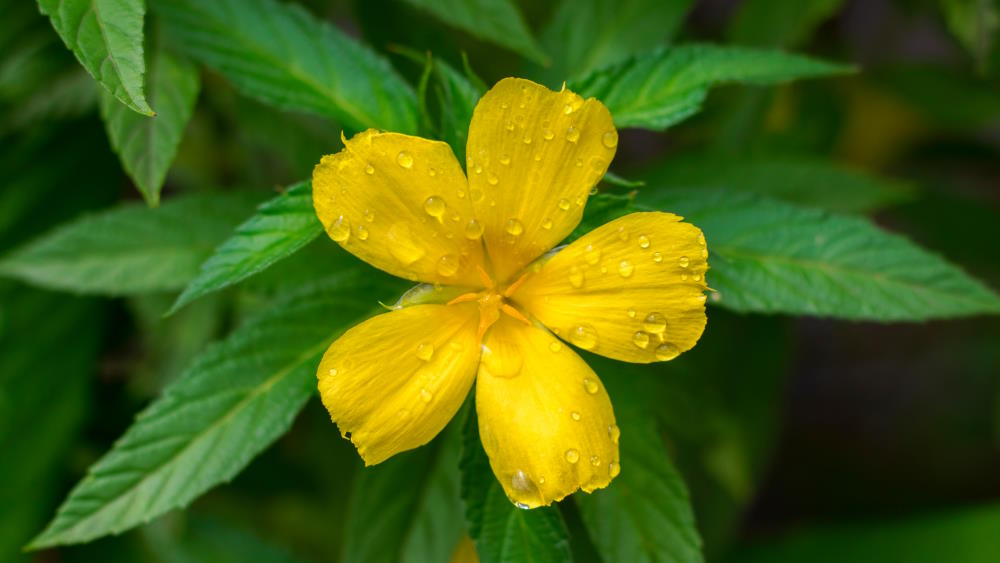
Damiana: can it help recover sexual appetite?
 Do you feel that the demands of day-to-day life have pushed your desire into the background? Have you noticed that during times of greater mental load, continuous stress, or prolonged physical fatigue, sexual appetite is the first function your body decides to "switch off"?
Many users ask us about the causes of a lack of desire or why they have less sexual appetite than before and what they can do about it.
It is often interpreted as an isolated problem or even as a personal failing, which generates frustration and anxiety. However, from a purely physiological perspective, a lack of desire is usually a secondary indicator: it is our body's way of telling us that the system is overloaded.
When worries increase, biology takes control and prioritises our energy. We are going to analyse exactly why this happens and whether damiana can be a supporting tool in this process.
Why sexual desire fluctuates
Sexual desire is not a static switch that remains on by default; it is a physiological state that requires a favourable internal environment.
Our autonomic nervous system is divided, broadly speaking, into two main branches: the sympathetic nervous system (responsible for the "fight or flight" response to a danger) and the parasympathetic nervous system (responsible for "rest and digest").
Sexual appetite and the arousal response rely heavily on the parasympathetic nervous system being active. That is, the body needs to feel safe and relaxed for desire to emerge.
The role of stress and cortisol in sexual desire
When we experience chronic stress, whether due to work problems, lack of sleep, or emotional load, our brain interprets that we are in a constant state of emergency. In response, the adrenal glands release cortisol and adrenaline.
In this state of "survival", the human body prioritises available resources. Energy and blood flow are directed to the muscles and the brain to resolve the immediate threat. Simultaneously, the body temporarily suppresses those functions that are not vital for surviving in that precise moment, such as deep digestion, tissue repair, and, of course, reproduction and sexual appetite.
-
Libido is temporarily switched off to ensure that the muscles and brain have enough energy to face what the body perceives as a threat
Understanding this hormonal cascade is fundamental. A loss of desire is not usually a dysfunction of the reproductive system itself, but a logical and adaptive response of a nervous system that is prioritising other areas. Recovering that sexual appetite inevitably requires sending signals to the brain that the emergency is over. This is where external modulators and plants with specific properties come into play.
What damiana (Turnera diffusa) is and how it interacts with the body
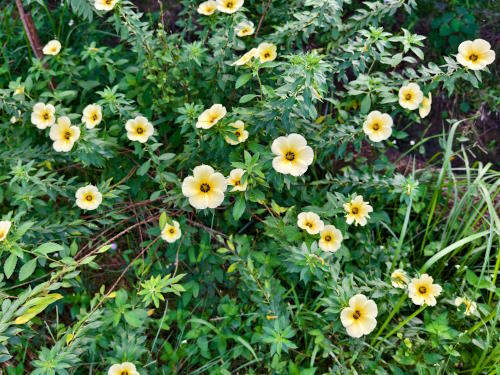
Damiana (Turnera diffusa) is a shrub with small, aromatic leaves, native to the arid and semi-arid regions of Central America, Mexico, South America, and the Caribbean. It belongs to the Turneraceae family and has been part of the traditional botany of these regions for centuries.
Unlike other plants that have suddenly become popular, the use of damiana has a long historical track record. However, its detailed scientific study is relatively recent. Researchers have sought to isolate and identify which specific compounds in its leaves are responsible for the effects attributed to it for generations.
The active compounds in damiana leaf
The phytochemical composition of damiana is complex and varied. Numerous compounds have been identified in the plant that work synergistically, that is, supporting each other to produce a biological effect.
Among the main components of Turnera diffusa, the following stand out:
- Flavonoids: Especially apigenin, a compound that in various studies has shown a high affinity for the central nervous system receptors associated with the modulation of anxiety and relaxation.
- Essential oils: Responsible for its characteristic aroma, these include substances such as cineole, alpha-pinene, and thymol, which also play a role in its assimilation.
- Glycosides and tannins: Compounds that participate in cellular protection and metabolism.
The quality and concentration of these active compounds depend hugely on the botanical processing. For example, when using a damiana leaf extract, it is important that the extraction method fully preserves the plant's own flavonoids and essential oils, thus ensuring that the structural properties remain stable and bioavailable to the human body.
The link between damiana and sexual appetite
Historically, damiana has been given the label of an aphrodisiac. In modern nutrition and supplementation, we are more cautious with this terminology. An aphrodisiac suggests a substance that automatically and directly provokes desire, which is physiologically very complex.
The current biological approach suggests that damiana does not "create" desire out of nowhere, but rather acts as a facilitator. It does so by intervening in the barriers that prevent desire from arising naturally. By containing compounds, such as apigenin, that interact with the central nervous system, the plant seems to promote a state of mental relaxation, mitigating some of the accumulated stress and tension. By reducing the noise of the "alert system" (sympathetic), it allows the "relaxation system" (parasympathetic) to regain control, creating the right setting for sexual appetite to recover.
Scientific studies on damiana
Various studies on the effects of Turnera diffusa on sexual desire have observed that damiana extracts have a positive impact on the recovery of sexual behaviour in animal models that previously showed a state of sexual exhaustion1 or lack of stimulus.
Furthermore, research on the plant's phytochemical profile confirms the presence of the aforementioned flavonoids and their bioactive capacity, suggesting mechanisms of action that involve both central nervous system pathways (reducing anxiety) and potential peripheral pathways related to hormonal and circulatory modulation2.
These findings coincide with the physiological approach: by reducing perceived tension levels and promoting relaxation, the plant indirectly facilitates the return of sexual appetite.
How to support the use of damiana on a day-to-day basis
Damiana is a supporting tool, not an isolated solution. If the body continues to be subjected to extreme stress, lack of sleep, or nutritional deficits, no single plant will be able to reverse the physiological process of suppressing desire on its own.
For damiana's properties to act effectively, it is advisable to integrate its use into a routine that promotes the body's homeostasis (balance).
Below, we show a table with the main focus areas that create synergies with the use of this plant:
| Action area | Complementary habit | Impact on sexual appetite |
|---|---|---|
| Rest | Maintain 7-8 hours of quality sleep. | During deep sleep, cortisol levels are regulated and proper hormonal resynthesis occurs, which is fundamental for desire. |
| Stress management | Incorporate tools such as diaphragmatic breathing or moderate physical activity. | Helps deactivate the sympathetic nervous system, allowing damiana to act on a more receptive nervous system. |
| Nutrition | Ensure an adequate intake of fatty acids (Omega 3), Zinc, and B vitamins. | These nutrients are essential cofactors for the synthesis of neurotransmitters and proper circulatory function. |
| Digital disconnection | Reduce screen use at least an hour before going to sleep. | Decreases mental overstimulation, facilitating the transition towards a state of intimacy and relaxation. |
Side effects and precautions when using damiana
Damiana's safety profile is generally very favourable when used within the recommended doses. In the majority of healthy adults, its consumption is well tolerated.
However, as with any active botanical ingredient, excessive consumption can trigger mild discomfort. Adverse effects reported in the scientific literature are rare, but may include mild gastrointestinal disturbances or headaches if the prescribed amounts are exceeded. It is fundamental to always follow the dosage instructions indicated on the food supplement.
Who should not take it?
Despite its general safety, there are certain population groups that should avoid consuming damiana or consult a healthcare professional beforehand:
- Pregnant or breastfeeding women: Due to the lack of conclusive studies on its safety during these stages.
- People on diabetes medication: Some studies suggest that damiana could have a mild hypoglycaemic effect, which could interfere with medication and alter blood sugar levels.
- People with severe psychiatric disorders: Given that the plant interacts with the nervous system.
Damiana as a support to recover sexual desire
Sexual appetite is a vital component of the human experience, but it is also incredibly sensitive to our environment and internal state. Understanding that its decline in times of stress is a natural response of our body helps us to approach the situation calmly and without putting too much pressure on ourselves.
Damiana (Turnera diffusa) could contribute to a good sexual appetite3 by promoting a state of relaxation and acting upon our nervous system, inviting us to create the favourable conditions for desire to flow once again. This must, of course, always be accompanied by a lifestyle that prioritises our general well-being.
Frequently Asked Questions (FAQ) about damiana and sexual appetite
To complement this information and resolve the most common doubts about the use of this plant, we have compiled the most frequently asked questions we receive:
Is damiana useful for sexual appetite in both men and women?
Yes, damiana's botanical mechanism of action does not distinguish between genders. Since its primary interaction is linked to modulating stress, relaxing the nervous system, and reducing tension (creating the right environment for natural desire to flow), it is fully applicable to both male and female physiology.
How long does damiana take to work?
As it is a botanical supplement and not a synthetic drug, damiana does not produce an instant or forced stimulating effect. Its action in the body is progressive. It is usual to start noticing a greater sense of well-being and relaxation after several weeks of continuous use, which gradually favours the recovery of sexual appetite, especially if accompanied by good habits of rest and stress management.
Can damiana extract be taken every day?
Yes, food supplements based on standardised damiana extract are formulated and dosed for safe daily consumption, always respecting the label instructions. Nevertheless, as part of good integrative supplementation practices, it is often advisable to take short periodic breaks (for example, pausing for a couple of weeks after a month of use) to prevent habituation and maintain the body's receptivity.
What other nutrients or plants can damiana be combined with?
To boost general well-being and energy balance, damiana works in excellent synergy with specific vitamins and minerals. It is often combined very effectively with zinc, which contributes to normal fertility and reproduction, or with B vitamins, which help reduce tiredness and fatigue, thus addressing the loss of desire on multiple biological fronts.
Bibliography
- Turnera diffusa Wild (Turneraceae) recovers sexual behavior in sexually exhausted males. Estrada-Reyes, R., Ortiz-López, P., Gutiérrez-Ortíz, J., & Martínez-Mota, L. (2009). Journal of Ethnopharmacology, 123(3), 423-429.
- Ethnobotany, phytochemistry, and bioactivity of the genus Turnera (Passifloraceae) with a focus on damiana—Turnera diffusa. Szewczyk, K., & Zidorn, C. (2014). Journal of Ethnopharmacology, 152(3), 424-443.
- Extracted from the EFSA health claims application list, under evaluation (ID 3833).
About the author
Content researched and written by the Anastore editorial team.
Reviewed and verified against scientific literature by our Nutrition and Research Department.
Find out more about our editorial policy and scientific rigour.

This article is strictly for informational purposes and does not replace the advice of a healthcare professional.