Cardiovascular health: metabolism and cellular energy
The human body is, from a biological engineering perspective, an exceptional machine at the centre of which lies an engine that never stops: the heart.
Scientific fact
Over the course of a single day, the heart beats approximately 100,000 times, pumping over 7,000 litres of blood through a vast network of blood vessels which, if laid out in a straight line, would wrap around the Earth more than twice.
Such a continuous and uninterrupted mechanical effort over a lifetime requires a constant and massive energy demand. However, when we think of bodily energy, we often make the mistake of simply reducing it to the calories we ingest through classic macronutrients: carbohydrates, fats, and proteins. But the reality is much more complex and subtle.
-
It is not just about counting calories. There are essential micronutrients for proper cardiovascular function.
For a plate of food to biochemically transform into a heartbeat, the strength to climb stairs, or the concentration to work, the body needs a series of microscopic "chemical keys" that facilitate these cellular reactions. It is precisely at this point that micronutrients come into play, and most particularly, the family of B-group vitamins.
Let us look at how our organism is oxygenated and what role specific compounds play in maintaining cardiovascular health.
Energy metabolism: the power station of the human body
How do we obtain energy?
To truly understand how we obtain energy, we must travel inside our cells, specifically to structures called mitochondria. These tiny formations act as veritable power stations producing a molecule called ATP (Adenosine Triphosphate), the organism's true energy "currency". Every contraction of the heart muscle and every nerve impulse travelling through our body consumes ATP.
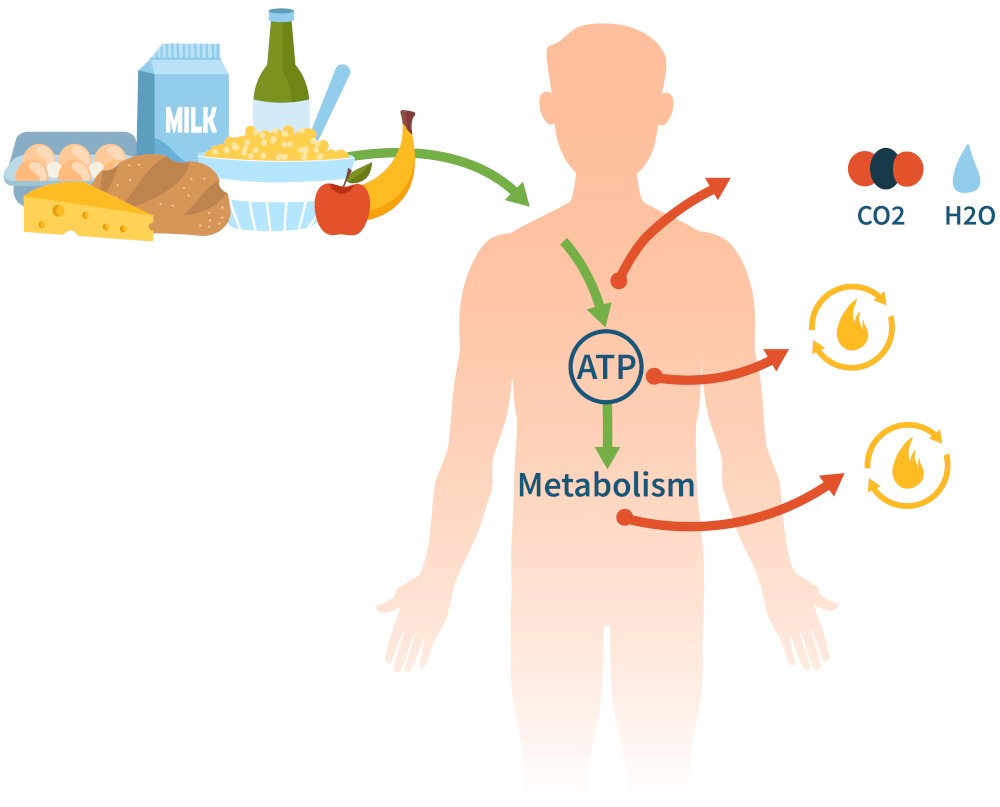
But mitochondria cannot perform this biological marvel on their own. They need coenzymes, organic molecules that assist and accelerate chemical reactions.
-
Thiamine, biotin, pantothenic acid, riboflavin, and vitamins B6 and B12 contribute to normal energy-yielding metabolism1,6.
This means that, without the adequate and constant presence of these vitamins in our diet, the conversion of food into useful energy becomes inefficient and slow.
- Thiamine (vitamin B1), for example, is crucial in the decarboxylation of carbohydrates, the step prior to sugars entering the mitochondrion.
- Pantothenic acid (vitamin B5) is a fundamental structural component of Coenzyme A, a molecule without which the famous Krebs Cycle (the central core of cellular respiration) simply could not exist.
What happens when the organism's energy system does not function perfectly?
When this delicate energy metabolism is not optimised, the first symptom is usually not a serious illness, but a sensation of deep exhaustion and constant heaviness.
It is important to note that these micronutrients do not act as nerve stimulants or central nervous system alterants (as caffeine or theine might), but rather resolve the problem from the base: they optimise cellular machinery so the body can produce and manage its own energy in an efficient, natural, and sustained manner over time.
-
Pantothenic acid, folate, riboflavin, and vitamins B6 and B12 contribute to the reduction of tiredness and fatigue6
The spark of the engine: specific nutrition for heart function
The heart is a muscle with unique characteristics that differentiate it from the rest of the body. Unlike the skeletal muscle in our arms or legs, which can fatigue, accumulate lactic acid, and stop to rest when it lacks oxygen, the heart muscle (myocardium) relies almost exclusively on aerobic metabolism. This means it requires an uninterrupted supply of oxygen and nutrients to generate continuous energy to prevent its collapse.
Why thiamine (vitamin B1) is important in the cardiovascular system
Within the complex array of B-group vitamins, there is one that historically stands out for its direct, measurable, and crucial impact on the cardiovascular system: thiamine, or vitamin B1.
The discovery of thiamine at the beginning of the 20th century was closely linked to the study of serious conditions that diminished the heart and nervous system, caused by extremely poor diets based almost exclusively on refined white rice, which lacks the grain's outer coating where this precious vitamin is housed.
-
Thiamine contributes to the normal function of the heart2,6.
At a biochemical level, thiamine allows myocardial cells to efficiently utilise energy substrates. Without sufficient thiamine, the complex metabolic pathways of the heart are altered, which can diminish the heart muscle's capacity to maintain its vigorous, stable, and constant contraction rhythm over the years.
The transport network: blood formation and cellular oxygenation
It is of no use having a strong heart and powerful pumping if the fluid travelling through the arteries cannot transport nutrients and oxygen to every corner of the body.
Blood is the vital means of transport, and red blood cells (erythrocytes) are the microscopic vehicles specialised in carrying oxygen from the pulmonary alveoli to the very last cell of the organism.
We can divide this process into two parts:
1. Red blood cell production
The production of red blood cells, a process medically known as erythropoiesis, is a continuous task occurring inside our bone marrow and demands an uninterrupted availability of raw materials.
Scientific fact
Your body is a factory that never rests. At this very moment, as you read this line, your bone marrow is producing between 2 and 3 million new red blood cells every second.
Vitamin B12 (cobalamin) and folic acid (vitamin B9) work in a synchronised team in DNA synthesis. Every time a stem cell in the bone marrow divides to create new red blood cells, it needs to copy its DNA exactly. If there is a deficiency of these vitamins, cells cannot divide properly, leading to the release of immature, fragile, and abnormally large red blood cells that are incapable of transporting oxygen effectively.
-
Vitamins B6 and B12 contribute to normal red blood cell formation6
-
Folate contributes to normal blood formation3,6.
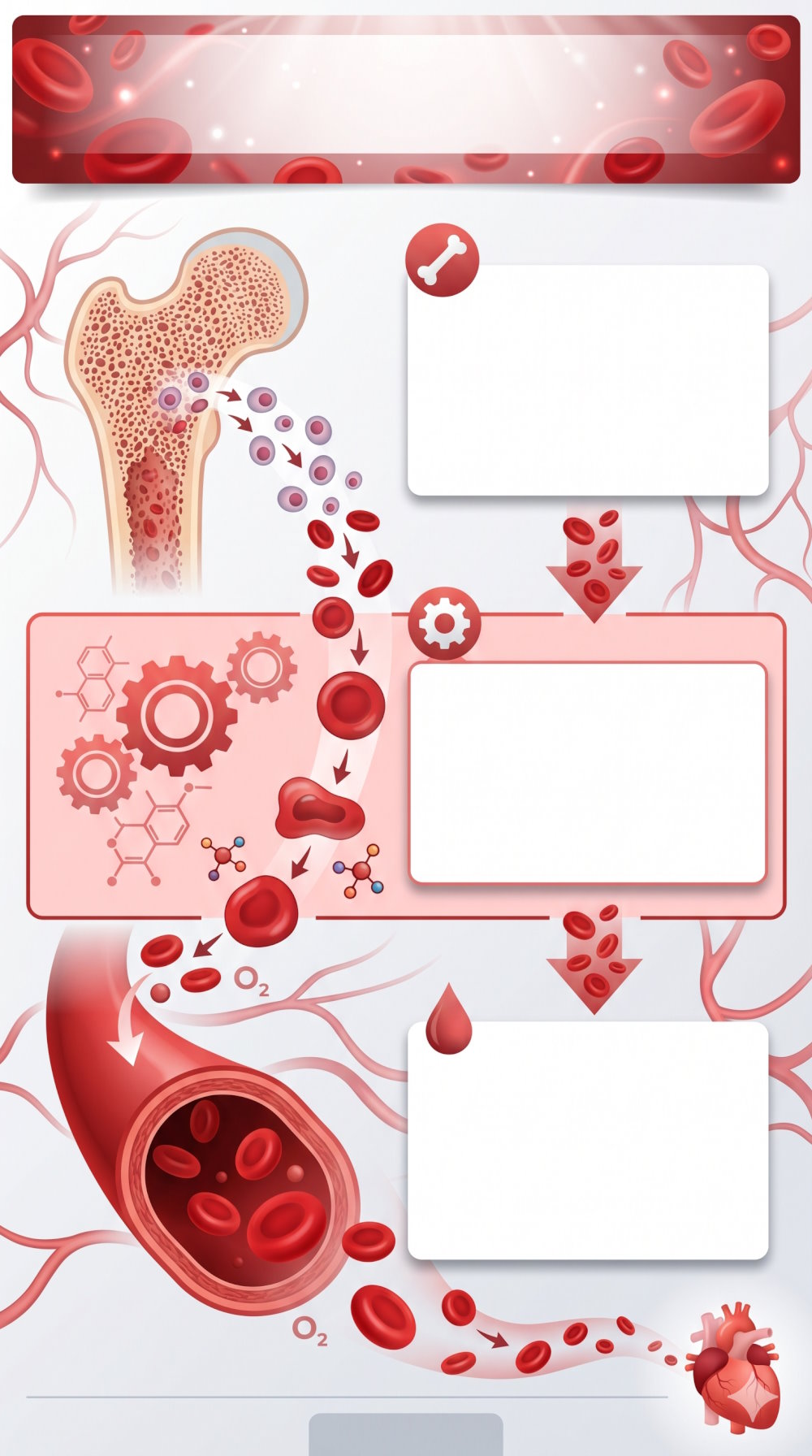
From the marrow
to the heart
- Massive cell production
- Red blood cell formation
- Tissue oxygenation
2. Maintenance of red blood cells
But formation is only the first part. Once created, red blood cells must remain functional in the bloodstream, withstanding turbulence and high pressures during their average 120-day lifespan, and this is where riboflavin comes in.
-
Riboflavin contributes to the maintenance of normal red blood cells6.
Furthermore, the main and fundamental component of the red blood cell is haemoglobin, a complex protein that indispensably requires iron to be able to chemically trap oxygen.
Interestingly, the assimilation and correct use of this mineral are regulated by other vitamins.
-
Riboflavin contributes to the normal metabolism of iron4,6.
The whole system is interconnected
Without adequate B-group vitamins, iron is not handled correctly, haemoglobin is not formed with quality, and the tissues end up suffering from a lack of oxygenation that inevitably translates into chronic fatigue, weakness, and poorer performance of the entire cardiovascular system.
Waste control: the importance of homocysteine metabolism
In any cellular "combustion" process, however efficient it may be, by-products are generated. One of the biomarkers that modern preventive medicine monitors with increasing attention is homocysteine.
Homocysteine is an amino acid that does not come directly from the diet, but is formed in the body as part of the metabolism of methionine (an essential amino acid that is present in the proteins we eat daily, such as meat, fish, eggs, or dairy products).
Under ideal metabolic conditions, homocysteine has a very short life. The body is able to recycle it rapidly through methylation processes to convert it back into methionine, or transforms it into cysteine, which is a natural and completely healthy process.
What happens if homocysteine is not recycled correctly
However, for these delicate recycling pathways to function, the organism requires the unavoidable presence of very specific vitamin cofactors. If these cofactors are missing, the machinery jams and homocysteine silently begins to accumulate in the bloodstream.
Research over recent decades seems to indicate that chronically elevated homocysteine levels in the blood could act as an irritating factor to the delicate inner lining of the blood vessels (the cellular endothelium), promoting unwanted oxidative stress and affecting long-term cardiovascular health and flexibility.
To keep this substance under strict control, our body relies on the combined work of folates and vitamins B6 and B12. These three vitamins act together as the "operators" ensuring that the biochemical recycling pathways flow and do not collapse.
-
Folate, vitamin B6 and vitamin B12 contribute to normal homocysteine metabolism5,6
A nutritional synergy for the cardiovascular system
In theory, a balanced diet should provide all these micronutrients. However, the reality of modern life is often very different.
Why diet may not be enough
Intensive food processing, grain refining (where most B vitamins are lost), high sugar consumption, and chronic stress are factors that rapidly deplete our reserves of water-soluble vitamins.
Furthermore, as we age, our digestive system's capacity to absorb certain nutrients, especially vitamin B12 (which requires a stomach protein called intrinsic factor to be assimilated), decreases considerably. This creates a nutritional gap.
Can supplementation support your diet?
For these reasons, responsible supplementation can be an appropriate approach. It is not about taking random, isolated doses, but rather seeking synergy and consistency.
Finding a balanced cardiovascular formula that integrates this vitamin complex in appropriate proportions would be the ideal scenario: these micronutrients can work together, mutually supporting each other in metabolic chains and ensuring that both the heart and the blood have the necessary tools to meet the demands of our daily life.
Possible side effects
B-group vitamins are water-soluble, which means the organism does not accumulate them in excess (except for B12, which is stored in the liver). What the body does not use during the day is safely eliminated through urine (which may take on a bright, completely harmless yellow hue due to riboflavin). However, it is important to bear in mind:
- Mild stomach upset: Taking concentrated vitamin supplements on an empty stomach can cause nausea or heartburn in sensitive individuals. It is advisable always to consume them with food.
- Unnecessary excesses: Although toxicity is hard to reach, consuming extreme megadoses of vitamin B6 over months can cause tingling in the extremities. Standardised and regulated supplements are formulated well below these risk limits.
Contraindications: Who should not take it?
Although these nutrients are vital, certain populations must exercise extreme caution and not supplement without prior medical supervision:
- Oncology patients: Certain treatments base their efficacy on blocking the use of folates. Taking supplements with folic acid (vitamin B9) could interfere with the therapy.
- People with severe kidney damage: Severely compromised kidney function can alter the ability to properly filter and excrete water-soluble vitamins.
- Undiagnosed severe cardiac pathologies: Anyone suffering from severe palpitations, shortness of breath, or chest pain must go to an accident and emergency department immediately, not attempt to mitigate symptoms with food supplements.
Summary for maintaining a healthy cardiovascular system
The human heart and our vascular network make up a truly complex logistical distribution system. Keeping it running at full capacity does not depend on miracle cures, but on providing our cellular machinery with the biochemical tools that biology demands:
- Thiamine for a steady heartbeat
- B-vitamin complex to form oxygen-rich blood
- Folates to keep metabolic waste such as homocysteine at bay.
Reducing tiredness and fatigue, as well as protecting our delicate cellular metabolism, begins by informing ourselves about our diet and what our body needs by understanding how it works, and always remembering that the body does not ask for excess, but a constant balance.
It is never too early to look after your heart and cardiovascular health
Bibliography
- Depeint, F., Bruce, W. R., Shangari, N., Mehta, R., & O'Brien, P. J. (2006). Mitochondrial function and toxicity: role of the B vitamin family on mitochondrial energy metabolism. Chemico-biological interactions, 163(1-2), 94-112.
- Dinicolantonio, J. J., Niazi, A. K., Lavie, C. J., O'Keefe, J. H., & Ventura, H. O. (2013). Thiamine supplementation in heart failure: a systematic review and meta-analysis of randomized trials. Ochsner Journal, 13(4), 495-499.
- Koury, M. J., & Ponka, P. (2004). New insights into erythropoiesis: the roles of folate, vitamin B12, and iron. Annual review of nutrition, 24, 105-131.
- Powers, H. J. (2003). Riboflavin (vitamin B-2) and health. The American journal of clinical nutrition, 77(6), 1352-1360.
- Selhub, J. (1999). Homocysteine metabolism. Annual review of nutrition, 19(1), 217-246.
- COMMISSION REGULATION (EU) No 432/2012 of 16 May 2012 establishing a list of permitted health claims made on foods, other than those referring to the reduction of disease risk and to children's development and health.
About the author
Content researched and written by the Anastore editorial team.
Reviewed and verified against scientific literature by our Nutrition and Research Department.
Find out more about our editorial policy and scientific rigour.

This article is strictly for informational purposes and does not replace the advice of a healthcare professional.